Blog · Comparison Guide
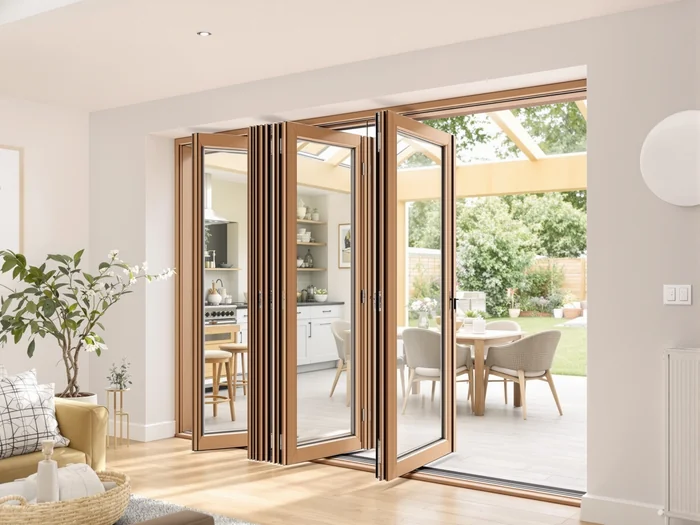
Bifold and sliding doors side-by-side in a modern UK kitchen extension
Bifold vs Sliding Doors: The Honest UK Comparison
It is the classic kitchen extension dilemma: bifold or sliding? Both open up the back of a UK home to the garden, both let in floods of natural light, and both look significantly better than the single uPVC door they are probably replacing. But the differences — in cost, maintenance burden, usable glass area, and how they actually feel to live with day to day — are substantial, and they matter more the longer you own the doors. Here is an honest, repairer's-eye comparison.
Bifold vs Sliding: At a Glance
| Criteria | Bifold Doors | Sliding Doors |
|---|---|---|
| Opening width | Up to ~90% of opening — panels fold and stack to one or both sides | ~60-65% of opening — one or two panels slide behind fixed panes |
| Glass area & light | More frame lines across the opening; each panel has its own frame | Larger uninterrupted panes — bigger 'picture window' effect when closed |
| Cost (supply & fit) | £3,000–£7,000+ (wider range due to panel count & material) | £1,200–£3,200 (narrower range, fewer configuration variables) |
| Thermal performance | More frame area = more potential thermal bridging. Good-quality systems comparable | Less frame area per m² of opening = slightly better insulation potential |
| Maintenance burden | Higher — multiple hinges, roller carriers, drop bolts and guide tracks to maintain | Lower — two roller carriages and a lock/gearbox; simpler mechanism |
| Mechanism complexity | High — each panel is a moving part. Alignment is critical | Simple — panels run on fixed tracks. Few things can go wrong |
| Resale appeal | Strong 'wow' factor; associated with premium kitchen extensions | Understated; preferred by buyers who value clean sightlines and lower upkeep |
Where Bifolds Win
The defining advantage of bifold doors is the opening. When fully folded back, a bifold system clears almost the entire structural opening — typically 90% or more — creating a genuinely seamless connection between indoors and out. On a warm day, with the doors open and the kitchen flowing onto the patio, the effect is transformative. This is the single feature that drives most bifold purchasing decisions, and it is the one that sliding doors cannot match.
Bifolds also offer more configuration flexibility. You can choose how many panels you want, which direction they stack, and whether to include a traffic door — a single panel that opens independently like a normal door for quick access without folding the whole system back. This is genuinely useful day to day: popping out to the bin, letting the dog in, or grabbing something from the barbecue does not require operating the whole door.
There is also the aesthetics argument. Bifolds have a certain architectural presence — they say "kitchen extension" in a way that sliding doors, for all their clean lines, do not. For some homeowners, that look is worth the cost premium all by itself, and that is a perfectly valid reason to choose them.
Where Sliding Doors Win
Sliding doors win on glass. Because a sliding door has only a few vertical frame members — the outer frame and the interlocking stiles where two panels meet — you get much larger, less obstructed panes of glass than with a bifold, where every panel edge is a frame line. When the doors are closed — which, in the UK climate, is most of the year — sliding doors deliver more light and a cleaner, more expansive view of the garden. If your priority is the view rather than the opening, sliding doors are the better choice.
Then there is the maintenance argument — and this is where our repair experience gives us a clear perspective. A sliding door is mechanically simple. The panels run on fixed tracks carried by two (sometimes four) rollers, and the lock is typically a straightforward hook or multipoint mechanism. There are no hinges to drift, no multiple panels to keep in alignment, no drop bolts to seize. When something goes wrong with a sliding door — rollers wear, a lock fails, seals perish — the repair is usually fast, contained, and relatively inexpensive. Our sliding door repair service handles all of these common faults. Worn rollers are replaced in under two hours, and perished seals — the most common cause of draughts — are renewed in a single visit. A bifold, by contrast, has all the same types of components — rollers, locks, seals — multiplied across four, five, or six panels and connected by an alignment-sensitive linkage system. More parts means more things that can eventually need attention. This is not a criticism of bifolds; it is simply the consequence of mechanical complexity.
Sliding doors also offer better value per metre of opening. For a given width, a sliding door typically costs less than a bifold — sometimes significantly less — while still delivering excellent performance, good thermal insulation, and a clean, modern look. If budget is a primary consideration and you do not need the full-opening capability, sliding is the pragmatic choice.
The Maintenance Reality
Let us be direct about this, because it is the question our network's specialists get asked more than any other: "which type gives me less hassle?" The answer, from years of repairing both, is sliding doors.
Bifolds are not "unreliable" — that would be unfair. A well-installed, good-quality bifold from a reputable system will serve you well. But they do drift. Building movement — and every house moves slightly with seasonal temperature and moisture changes — can knock the panel alignment out over time. A door that glided perfectly open last summer suddenly scrapes the frame a year later. Hinges need occasional tweaking, roller carriers accumulate track debris, and the traffic door mechanism can loosen with heavy use. These are all fixable — our bifold door repair specialists adjust, maintain and repair them routinely — but they are real. If you want a door you can install and essentially forget about for a decade, a sliding door is a better bet. If you are happy with the idea of a door that benefits from a quick service every couple of years, the bifold maintenance burden is manageable.
For a practical guide to keeping your bifolds running smoothly, see our bifold door adjustment guide, and for diagnosing sliding door issues, our troubleshooting guide walks you through the common faults step by step.
Cost Comparison
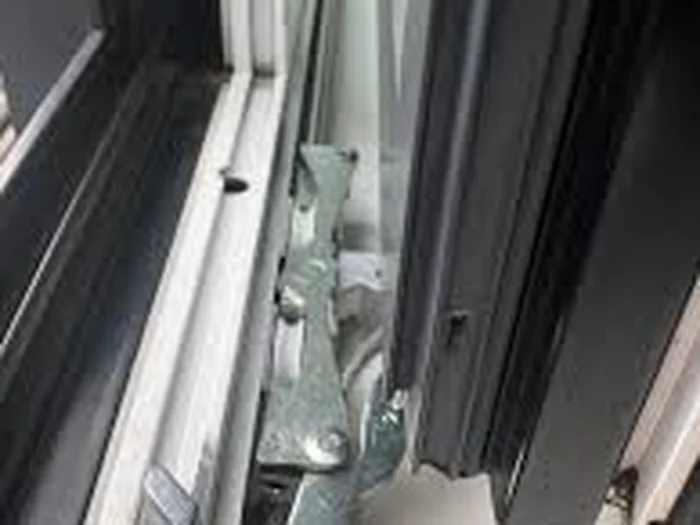
Bifold doors stacked open — more opening width, more hardware, more cost
For a given opening width, bifolds cost more than sliding doors — typically 50% to 100% more. The difference comes from the more complex engineering: more panels, more hinges, more hardware, more installation time. A three-panel uPVC bifold for a standard 3-metre opening might start around £3,000 supplied and fitted, whereas a comparable uPVC sliding patio door for the same opening could be £1,500 to £1,800. At the aluminium end of the market, the gap widens: a five-panel aluminium bifold from a premium system can approach £7,000 or more, while a large aluminium slider for the same opening might be £2,500 to £3,200.
The cost difference extends to repairs, too. Replacing rollers on a sliding door is a contained job — typically £80 to £160. Replacing rollers across all the panels of a bifold, plus adjusting the hinges and linkages, is a bigger task. Neither repair is prohibitively expensive, but over the 15- to 25-year lifespan of a door, the cumulative maintenance cost of a bifold is almost certain to be higher.
For a detailed breakdown of repair and replacement costs across door types, read our UK cost guide for 2026.
Our Verdict
If we had to pick one for our own homes — and this is personal, not prescriptive — we would lean toward sliding doors. The cleaner sightlines, larger glass area, lower cost, and significantly simpler maintenance are a powerful combination, especially in a climate where the doors are closed for much of the year. But that is a preference, not a rule.
If your vision for your extension centres on throwing the whole back of the house open on summer days — barbecues, kids running in and out, a genuinely unified indoor-outdoor space — bifolds deliver an experience that sliding doors cannot replicate. For that use case, the cost premium and the incremental maintenance are absolutely worth it. The right choice depends on how you actually live, not on a spec-sheet comparison.
Mid-article takeaway: Whichever door type you have — or are considering — both bifolds and sliders are highly repairable. Before replacing an entire door system, get a specialist assessment. A minor adjustment or a simple part replacement can restore smooth operation at a fraction of replacement cost.
Get a Free AssessmentFrequently Asked Questions
Which is cheaper — bifold or sliding doors?
Sliding doors are typically cheaper than bifold doors for the same opening width — both at the point of purchase and over the long term. A basic uPVC sliding patio door supplied and fitted might run from £1,200, whereas a comparable-width bifold starts around £3,000 and can exceed £7,000 for larger aluminium systems. Sliding doors also have fewer moving parts, which means lower maintenance costs over their lifespan. However, the 'right' choice depends on your priorities: if a full-width opening is essential to how you use your extension, a bifold may be worth the premium.
Do bifold doors need more maintenance than sliding doors?
Yes, bifold doors generally require more maintenance than sliding doors simply because they have more moving parts. A bifold system includes multiple hinges per panel, top and bottom roller carriers, guide tracks, and often a traffic door mechanism — all of which can drift out of adjustment, collect debris, or wear over time. Sliding doors, by contrast, typically have two roller carriages and a simple lock mechanism. This mechanical simplicity means fewer things can go wrong and maintenance is less frequent. Bifolds are not inherently unreliable, but they do need periodic adjustment and cleaning more than sliders do.
Can bifold doors be repaired if they drop or become stiff?
Yes, the vast majority of bifold door issues — dropping, catching on the floor, becoming stiff to operate, or not closing flush — are repairable. Most commonly, the hinges and pivots need adjustment, which a specialist can do in one to two hours. If rollers have worn flat or a hinge has failed, replacement parts are available for the major UK-market aluminium and uPVC bifold systems. In most cases, a full door replacement is unnecessary. If your bifold is playing up, read our bifold adjustment guide for a step-by-step explainer, or request a quote from a local bifold specialist.
Need help with your bifold or sliding door?
Whether it needs adjusting, repairing, or an honest opinion on whether to repair or replace, get a free quote from a vetted local specialist.
Get a Free Quote