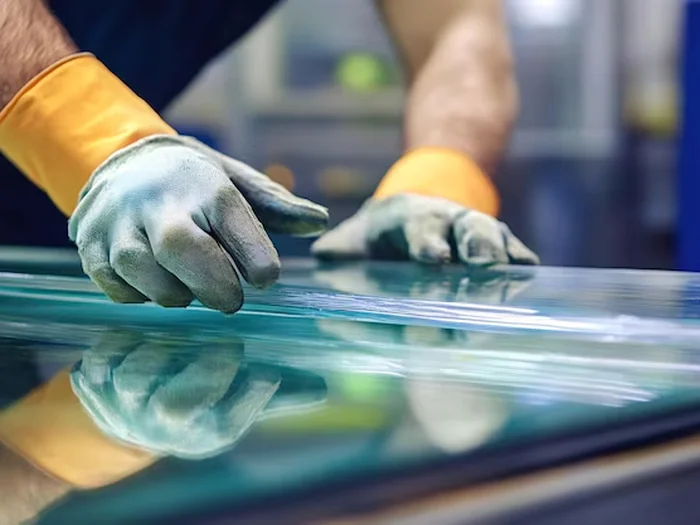
Fitting a replacement sealed unit — glass renewed, door frame stays
Sliding Door Glass Replacement Across the UK
Misted double glazing — that foggy, cloudy appearance between the two panes that will not wipe away — is one of the most common reasons UK homeowners contact us about their sliding and patio doors. It means the sealed double-glazed unit has failed: the hermetic seal around the edge of the unit has broken, moisture has entered the cavity, and the thermal insulating performance of the glass has been lost.
The important thing to know — and the thing many homeowners do not realise — is that you do not need to replace the entire door when the glass fails. The glass unit is a replaceable component, much like a roller or a lock. Our glass replacement service removes the failed unit, measures for a new one manufactured to the exact same dimensions and specification, and fits it into your existing door frame. You keep the door; the glass is renewed. This is typically a fraction of the cost of a full door replacement.
We replace glass in sliding doors, patio doors, French doors, bifold doors, and conservatory doors — across all frame materials. Whether your door is uPVC, aluminium, or timber, and whether the glass is standard clear double glazing, toughened safety glass, or a specialist specification, the process is the same: measure, manufacture, fit.
Glass Replacement Service
The process is designed to be as disruption-free as possible. The specialist visits to measure the existing glass unit precisely — height, width, and thickness, plus any special characteristics like toughened glass markings, low-E coating orientation, or patterned glass type. These measurements go to a glass manufacturer, and the replacement sealed unit is made to order. Lead times are typically a few working days for standard units.
On the fitting visit, the specialist removes the door beads (the trim strips that hold the glass in place), takes out the failed unit, cleans the frame rebate, fits the new unit into fresh gaskets, and replaces the beads. The door is reassembled, tested for smooth operation, and checked for any draughts around the new glass. Your old unit is taken away for disposal — no skip, no trip to the tip, no hassle.
When Glass Needs Replacing
Misting or condensation between panes
This is the definitive sign of a failed sealed unit. Condensation on the room side of the glass is normal — wipe it away. Condensation between the two panes means the seal has failed and the unit's thermal performance is gone. Replacement is the only permanent fix.
Cracks, chips, or impact damage
A crack in a sliding door glass panel is a safety concern as well as a thermal one. Even a small chip at the edge of the glass — often caused by the door being slammed or by an object caught in the track — can grow into a full crack as the door is used. Toughened safety glass, which is required in doors, is designed to break into small granular pieces rather than dangerous shards, but a cracked panel should still be replaced promptly.
Broken pane — door still works but glass is smashed
If the glass has shattered but is still held in place (as toughened glass is designed to do), the door may remain operable, but it is not secure or weatherproof. This is a priority repair, and for urgent situations our emergency repair service can arrange temporary boarding and rapid glass replacement.
Upgrading to energy-efficient glazing
If your sliding door is older and the glass is not low-E (low-emissivity) coated, replacing the glass with a modern energy-efficient unit can noticeably improve the room's warmth and reduce heating costs — all without replacing the door frame. This is an option worth discussing if you are already replacing a failed unit and want to upgrade at the same time.
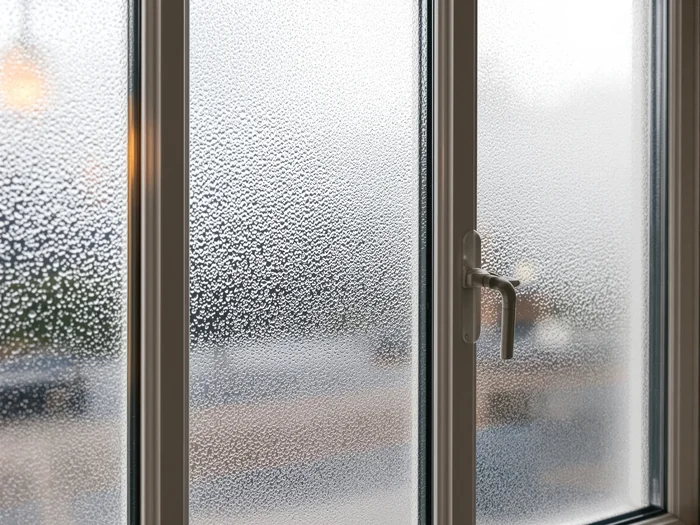
Condensation trapped between the panes — the unmistakable sign of a failed sealed unit
Misted Double Glazing Explained
A failed sealed unit looks foggy because moisture has broken through the hermetic seal — here is what happens and why replacement is the only permanent fix.
A double-glazed unit is two panes of glass separated by a spacer bar around the perimeter, creating a sealed cavity. Inside the spacer bar is a desiccant — a moisture-absorbing material — that keeps the air inside the cavity dry. The entire assembly is hermetically sealed with a primary seal (typically hot-melt butyl) and a secondary seal (typically polysulphide or silicone). This seal system is what keeps moisture out and gives the unit its thermal insulation properties.
Over time — typically 10 to 20 years, though it varies considerably with exposure conditions — the perimeter seals degrade. Sunlight, temperature cycling, and the natural ageing of sealant materials all contribute. When the seal fails, moisture-laden air from outside enters the cavity. The desiccant absorbs moisture until it becomes saturated; once saturated, the moisture condenses on the inner glass surfaces every time the temperature drops. That is the misting you see.
There are services that offer to "repair" misted units by drilling small holes, flushing the cavity with a cleaning solution, and fitting vents, but we are direct about their limitations: they do not restore the hermetic seal, the desiccant remains saturated, and the thermal performance of the unit is not recovered. These treatments can clear the misting temporarily — sometimes for months, occasionally for a year or two — but they are a short-term cosmetic fix, not a permanent solution. Replacement of the sealed unit is the only repair that restores full thermal performance and carries a manufacturer warranty on the new glass.
Glass Options
Standard double glazing
Two panes of float glass with an air or argon-filled cavity — the most common specification for UK sliding and patio doors. Suitable for most domestic installations, meets building regulation thermal performance requirements.
Toughened safety glass
Heat-treated glass that is several times stronger than standard float glass and, critically, breaks into small granular fragments rather than dangerous shards. Required in doors and low-level glazing. Almost all modern sliding door glass is toughened — the specialist will confirm this during measurement.
Low-E energy-efficient glass
One or both inner surfaces are coated with a microscopically thin metal oxide layer that reflects heat back into the room while allowing sunlight to pass through. Low-E glass improves the thermal performance of the unit noticeably and is standard on new door installations. If your existing unit is not low-E, upgrading during replacement is worth considering.
Acoustic glass
Uses panes of different thicknesses and sometimes a wider cavity to reduce sound transmission. Useful for doors facing busy roads. Acoustic units are heavier than standard units and may require the door rollers and track to be in good condition to handle the extra weight.
Obscure / privacy glass
One pane is acid-etched or patterned to obscure the view while letting light through. Common on bathroom doors and ground-floor doors where privacy is a concern. Available in a range of patterns; the specialist can match your existing obscure pattern in most cases.
Glass Replacement Cost Factors
The cost of replacing a sliding or patio door glass unit depends on several factors, and we always provide a clear quote before any work begins. The main cost drivers are the size of the glass unit — larger doors require larger, heavier, and more expensive units — the glass specification (standard, toughened, low-E, acoustic, obscure), and whether the glass is a standard rectangular shape or a shaped unit (arched tops, for example, cost more to manufacture).
As a qualitative guide: replacing a standard double-glazed unit in a typical uPVC patio door sits in the mid-range of our service costs — more than a roller or handle replacement, less than a full door installation. Specialist glass (acoustic, large-format, or shaped units) sits at the upper end. The work includes measurement, manufacture, delivery, fitting, disposal of the old unit, and a warranty on the new glass. For more detailed pricing guidance, see our pricing page and our blog article on sliding door costs.
Glass Replacement Near You
If you are searching for "patio door glass replacement near me" or "glass replacement for patio door" because your sliding door has a misted, cracked, or broken glass unit, our matching service connects you with a vetted local specialist who can measure, order, and fit a replacement. Tell us your postcode and describe your door and the glass issue, and we will put you in touch with the right specialist for your area.
Our network covers 14 major UK cities: Manchester, Birmingham, Leeds, Liverpool, Bristol, Sheffield, Newcastle, Nottingham, Leicester, Southampton, Brighton, Glasgow, Edinburgh, and Cardiff — plus their surrounding areas.
Frequently Asked Questions
Common questions about this service from UK homeowners.
Available Across the UK
Our network of independent specialists covers 14 major UK cities and their surrounding areas — from Glasgow to Brighton, Cardiff to Newcastle.
In London? Visit our dedicated London specialists at sliding-door-repair-london.uk
Replace That Misted Glass Today
New sealed units fitted by vetted local specialists — free, no-obligation quotes.