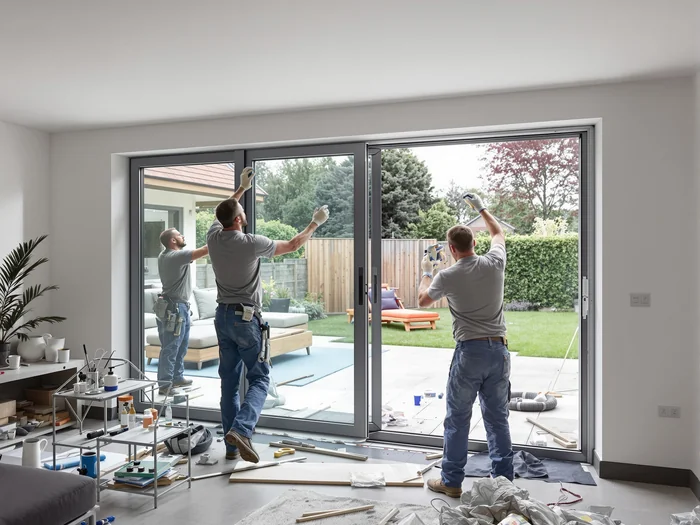
Fitting a new door — professional installation from survey to handover
New Sliding & Patio Door Installation
We are a repair-first platform — and proud of it. The overwhelming majority of sliding and patio door problems can be fixed without replacing the door, and we will always recommend repair when it is the right choice. But we are also honest: there comes a point where repair stops making sense and installation of a new door is the smarter investment.
That point might be when the door frame has rotted or corroded beyond what local repair can address, when the door is single-glazed and you want the thermal performance and comfort of modern double glazing, when the door system is so old that parts are genuinely unavailable, or when you are renovating and want a different door configuration — perhaps replacing an old sliding door with a modern bifold or upgrading from a two-panel slider to a three-panel configuration for a wider opening.
Our installation service connects you with vetted independent installers who supply and fit new sliding, patio, bifold, French, and tilt-and-slide doors across all frame materials. They provide a free survey, a detailed itemised quote, and a professional installation — handled properly from start to finish, including removal and disposal of your old door.
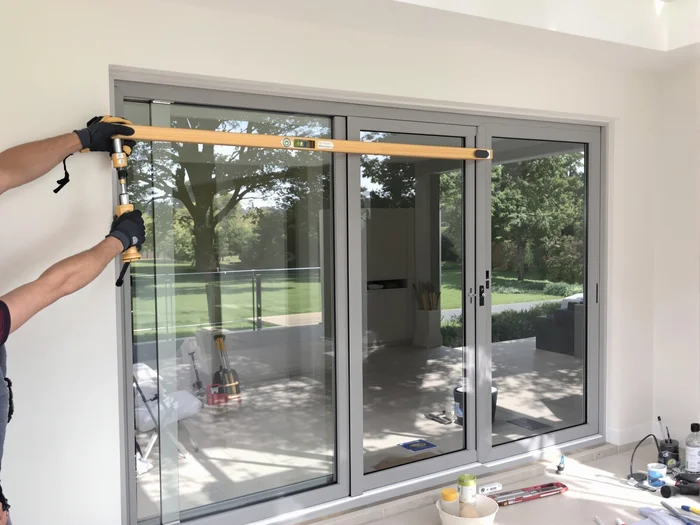
A new sliding door being positioned — professional installation ensures perfect alignment
When Installation Beats Repair
We recommend repair wherever possible — but here is when a new door installation genuinely makes more sense than patching up an old one.
We recommend repair wherever possible — it is usually cheaper, faster, and less disruptive than a full door installation. Our sliding door repair, patio door repair, and parts replacement services cover the vast majority of door faults.
However, there are situations where installation of a new door is genuinely the better option. If the frame itself is structurally compromised — a rotted timber frame, a severely corroded aluminium frame, or a uPVC frame that has warped — repair is not viable because the foundation of the door is unsound. If the door is single-glazed and you are spending on heating that is literally disappearing through the glass, upgrading to modern double glazing recovers that investment over time. If parts for your door are genuinely obsolete and cannot be sourced, a new door becomes the practical solution.
Our specialists do not earn commission on door sales. They are independent tradespeople who are paid for their time and skill, whether that is a repair or an installation. When they assess your door, they will tell you honestly whether repair or replacement is the right choice — and if replacement is recommended, they will explain exactly why.
Cost to Install a Sliding or Patio Door
This is the question every homeowner asks — and the honest answer is that it depends on a range of factors. We do not give fabricated exact prices because no two doors, no two openings, and no two properties are identical. What we do provide is a clear breakdown of what drives the cost.
Door size and configuration: A standard two-panel uPVC patio door costs less than a large three-panel aluminium slider, which costs less than a bespoke four-panel bifold. More glass, more frame material, and more complex mechanisms increase the door cost.
Frame material: uPVC is the most affordable and most common choice. Aluminium is mid-range to premium — stronger, slimmer frames, more contemporary. Timber is at the upper end — beautiful and traditional but more expensive. Composite doors (timber inside, aluminium outside) are a premium option.
Glazing specification: Standard double glazing is the baseline. Upgrading to low-E glass, argon-filled cavities, acoustic glass, or triple glazing increases the cost. Toughened safety glass is included as standard.
Structural work: If the opening needs widening, a new lintel is required, or the existing frame needs substantial making-good, the builder's work adds to the total cost.
Removal and disposal: Taking out the old door, disposing of it responsibly, and clearing the site are included in the quote — make sure any quote you compare includes this, as some installers quote a door-only price and add removal separately.
For a deeper look at cost factors, visit our pricing page. Every installation starts with a free survey and an itemised quote.
Door Types We Install
Sliding Doors
The classic configuration: panels slide horizontally along a track. Available in two-panel, three-panel, and pocket configurations. uPVC, aluminium, and timber. See our sliding door repair page.
Patio Doors
The UK's most common exterior door type — a sliding panel alongside a fixed panel, typically uPVC. Simple, reliable, and cost-effective. See patio door repair.
Bifold Doors
Multiple panels that fold and stack to one or both sides, creating a wide opening. Popular for kitchen extensions. See bifold door repair.
French Doors
Classic double opening doors, hinged at the sides. Traditional appearance, suits period properties. See French door repair.
Tilt & Slide Doors
A premium sliding system where the panel tilts inwards for ventilation and slides for full opening. See tilt & slide door repair.
uPVC vs Aluminium for New Doors
uPVC is the most affordable option, provides excellent thermal insulation, requires virtually no maintenance beyond occasional cleaning, and is available in a wide range of colours and wood-effect finishes. Modern uPVC doors are a significant step up from the 1990s white plastic stereotype. The main limitation is frame thickness — uPVC frames are thicker than aluminium, meaning less glass area for the same opening size.
Aluminium is stronger, allowing for slimmer frames and larger glass areas. An aluminium door lets in more light and has a more contemporary, premium appearance. Aluminium is highly durable — it will not warp, rot, or rust (though it can corrode in coastal environments if not properly treated). Modern aluminium doors incorporate a thermal break that dramatically improves thermal performance. The trade-off is cost: aluminium doors are more expensive than uPVC.
Timber offers a traditional, high-end appearance that suits period properties. Modern engineered timber doors are more dimensionally stable than solid timber. Timber doors require periodic maintenance — painting or oiling — to protect the wood from weathering.
The Installation Process
Survey
An installer visits your property to measure the opening, discuss your requirements, and assess any structural considerations. They will show you door options, talk through frame materials and glazing choices, and answer any questions.
Quote
You receive a detailed, itemised quote covering the door, the installation labour, any structural work, and removal and disposal of the old door. The quote is fixed — no hidden extras.
Manufacture & lead time
Once you accept the quote, the door is manufactured to your specifications. Lead times vary by door type and manufacturer — typically a few weeks for standard doors. The installer keeps you updated on the schedule.
Fitting day
The installer removes the old door, prepares the opening, fits the new frame and door, adjusts everything for smooth operation, seals around the frame, and clears the site. For a like-for-like replacement, this is typically a single day's work.
Handover & guarantee
The installer walks you through your new door — how to operate it, how to lock it, how to maintain it. You get the manufacturer's warranty on the door and the installer's guarantee on the workmanship.
Installation Near You
If you have decided it is time to replace your sliding or patio door — or you want an honest assessment of whether repair or replacement makes more sense — our matching service connects you with a vetted local installer covering your area. Tell us your postcode, describe your current door and what you are looking to replace it with, and we will put you in touch.
Our network covers 14 major UK cities: Manchester, Birmingham, Leeds, Liverpool, Bristol, Sheffield, Newcastle, Nottingham, Leicester, Southampton, Brighton, Glasgow, Edinburgh, and Cardiff — plus their surrounding areas. For London, visit sliding-door-repair-london.uk.
Frequently Asked Questions
Common questions about this service from UK homeowners.
Available Across the UK
Our network of independent specialists covers 14 major UK cities and their surrounding areas — from Glasgow to Brighton, Cardiff to Newcastle.
In London? Visit our dedicated London specialists at sliding-door-repair-london.uk
Ready for a New Door?
Free surveys and itemised quotes from vetted local installers — no pressure, no obligation.