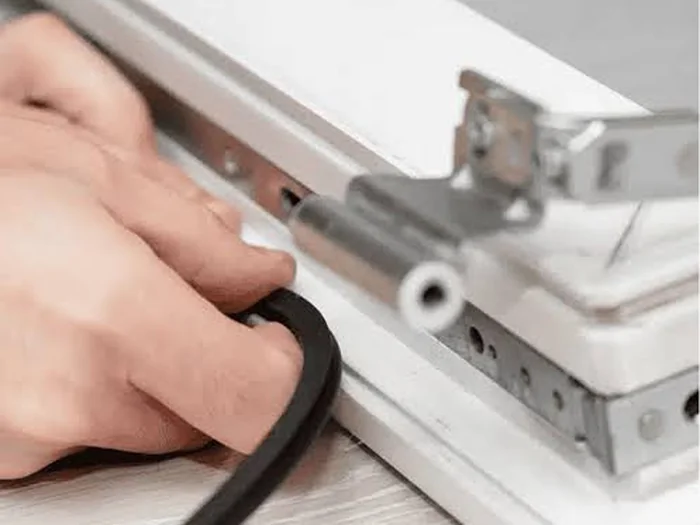
Working on a tilt-and-slide gearbox — one of the more complex door mechanisms
Tilt & Slide Door Repair Across the UK
Tilt-and-slide doors are clever pieces of engineering. They combine the convenience of a sliding patio door with the ventilation control of a tilt-in window — a single handle movement switches the door between tilt mode (the top tilts inwards for airflow) and slide mode (the door slides open as normal). When they work properly, they are brilliant: you get fresh air without fully opening the door, and the tilt position is secure enough to leave the door ajar while you are at home.
But tilt-and-slide mechanisms are complex. Inside the door panel, a system of gearboxes, locking points, guide channels, and linkage bars all work together to switch between tilt and slide modes. When any part of this system fails or drifts out of adjustment, the door can jam — stuck in tilt position, refusing to close, or unable to lock. These are the tilt-and-slide nightmares that our specialist network deals with regularly. Many general door repairers will not touch tilt-and-slide doors because the mechanism is too unfamiliar, but our network includes specialists who understand them inside out.
We also cover lift-and-slide door systems — the heavier, premium alternative that uses a lever mechanism to lift the door panel off its weather seal before sliding. Both systems require specialist knowledge, and both are covered by our vetted independent specialists across 14 UK cities.
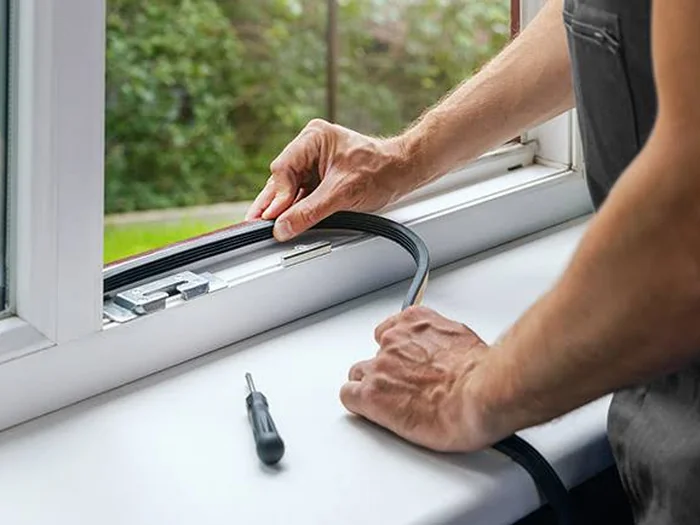
The complex gearbox inside a tilt-and-slide door — where most tilt-and-slide faults originate
Tilt & Slide Problems We Fix
Tilt-and-slide doors have a unique set of failure patterns. Here are the faults our specialists resolve — from jammed tilt positions to failed gearboxes.
Door stuck in tilt position
This is the classic tilt-and-slide emergency. The door is tilted inwards for ventilation and will not return to the closed slide position — the handle feels jammed, or it rotates without engaging. The cause is usually that the internal mechanism has been operated out of sequence (the handle was turned before the door was fully closed, or forced in the wrong direction) and the gearbox is now in an intermediate position with the locking points incorrectly engaged. A specialist can typically reset the mechanism without replacing parts, though this requires knowing the correct reset procedure for your specific door brand.
Door will not close or lock
When the tilt-and-slide door reaches the closed position but will not lock — or will not close fully because something is blocking it — the locking points have likely moved out of alignment. This can happen if the door has dropped slightly (worn rollers) so the lock tongue no longer aligns with the keep, or if the internal gearbox has partially failed and one or more locking points are not retracting fully. The specialist will identify whether the fix is adjustment, gearbox repair, or lock replacement. See our lock replacement page.
Handle rotates without engaging the mechanism
If the handle spins freely without operating the tilt or slide function, the gearbox inside the door has failed. The gearbox is the central component that converts handle rotation into the movement of the locking points and the switching between tilt and slide modes. Gearbox failure is relatively common on older tilt-and-slide doors and is often caused by internal gear teeth stripping — particularly if the door has been forced at some point. Gearbox replacement is a specialist job: the replacement gearbox must match the door brand and model exactly.
Gearbox failure
The gearbox is the heart of a tilt-and-slide door. When it fails, the entire door mechanism stops working correctly. Symptoms include the handle not engaging, the door not switching between tilt and slide modes, or a grinding or clicking sound when operating the handle. Gearbox replacement involves removing the door panel's outer profile to access the internal mechanism, identifying the correct replacement gearbox for the door brand and model, fitting it, and testing both tilt and slide functions. This is a mid-range repair that is far cheaper than replacing the entire door.
Worn rollers causing the door to drop
Tilt-and-slide doors use similar roller assemblies to standard sliding doors, and these rollers wear over time. When the rollers wear, the door drops slightly, which can cause the locking points to miss their keeps and the door to drag on the track. Roller replacement on a tilt-and-slide door is slightly more involved than on a standard slider because the tilt mechanism must be correctly disengaged to access the rollers, but it is a routine repair for a tilt-and-slide specialist. See roller and track replacement.
Door drops when sliding
If the door operates correctly in tilt mode but drops or drags when sliding, the issue is specifically with the sliding rollers or track — the tilt mechanism is likely fine. This is a more straightforward repair: clean the track, check the rollers, and replace if worn. A specialist will also check that the tilt mechanism is not being strained by the door being out of alignment, as this can lead to premature gearbox wear.
How Tilt & Slide Mechanisms Work
Understanding how a tilt-and-slide door works helps explain why repairs need specialist knowledge. The door has two operating modes, controlled by a single handle:
Tilt mode: With the door fully closed, turning the handle to the tilt position (typically 90 degrees) retracts the sliding locking points but engages the tilt hinge at the bottom of the door. The top of the door tilts inwards by a few centimetres, providing secure ventilation. The door cannot slide open in this position.
Slide mode: From the fully closed position, turning the handle to the slide position (typically 180 degrees) retracts all locking points and the tilt hinge, allowing the door to slide open along its track. The door must be fully closed before switching between tilt and slide modes.
The mechanism that makes this possible is a system of interconnected components inside the door panel: a central gearbox, a series of locking points (hooks and bolts) around the door perimeter, a tilt hinge assembly at the bottom, and linkage bars connecting everything together. When any component fails or drifts out of adjustment, the door can jam — which is why forced operation (turning the handle when the door is not in the correct position) is the most common cause of tilt-and-slide failures.
This complexity is also why many general door repairers decline tilt-and-slide work. Diagnosing the fault requires understanding the sequence of operation; repairing it requires knowing how to safely access the internal mechanism and correctly reset or replace the affected components. Our network includes specialists who do this work regularly.
Lift & Slide Doors
Lift-and-slide doors are a premium alternative to tilt-and-slide. Instead of tilting for ventilation, a lift-and-slide door uses a lever handle that lifts the entire door panel off its weather seal before it slides. When you close the door and release the lever, the panel drops back down onto the seal, creating a highly effective airtight and watertight barrier. Lift-and-slide doors are heavier and more robust than standard sliders, and they are common in high-end new builds and architect-designed extensions.
When lift-and-slide doors fail, the cause is usually worn rollers (the door drags rather than glides), a stiff or seized lifting mechanism (the lever is hard to operate or the door does not lift fully off the seal), or a lock alignment problem (the door closes but will not lock because the locking points no longer align with the keeps). Our specialists cover both tilt-and-slide and lift-and-slide systems.
The repair approach for lift-and-slide doors is different from tilt-and-slide. The lifting mechanism is generally simpler — a cam on the handle shaft that pushes the panel upwards — but it operates under higher load because it lifts the entire door weight. Roller replacement and mechanism lubrication are the most common lift-and-slide repairs, and these are routine jobs for a specialist with lift-and-slide experience.
Tilt & Slide Repair Near You
Searching for "tilt and slide door repair near me" or "tilt and slide patio door repairs near me" connects you to our network of vetted independent specialists across 14 UK cities: Manchester, Birmingham, Leeds, Liverpool, Bristol, Sheffield, Newcastle, Nottingham, Leicester, Southampton, Brighton, Glasgow, Edinburgh, and Cardiff, plus their surrounding areas.
Because tilt-and-slide doors require specialist knowledge, we take care to match you with a specialist who has documented experience with these mechanisms — not a general door repairer. Provide your postcode and describe your door problem, and we will connect you with the right local specialist for your door type and fault.
Repair or Replace the Mechanism?
When a tilt-and-slide mechanism fails, homeowners often worry that the entire door needs replacing. In almost every case, it does not. Tilt-and-slide doors are built around replaceable components: the gearbox, locking points, rollers, and linkage bars are all designed to be swapped out individually. Even a complete gearbox failure — the most serious tilt-and-slide fault — is typically resolved by replacing the gearbox unit, not the door. A gearbox replacement costs a fraction of what a new tilt-and-slide door costs, and it restores the door to full function.
Full door replacement is only recommended when the door frame is structurally compromised or the glass has failed across multiple panels. These are rare scenarios. Our specialists will always recommend repair over replacement where it is viable — their reputation is built on honest advice, not on selling unnecessary installations.
If you are considering a new door installation rather than a repair, see our new door installation service page for options. But we recommend getting a specialist assessment first — you may find the repair is simpler and cheaper than you expect.
Frequently Asked Questions
Common questions about this service from UK homeowners.
Available Across the UK
Our network of independent specialists covers 14 major UK cities and their surrounding areas — from Glasgow to Brighton, Cardiff to Newcastle.
In London? Visit our dedicated London specialists at sliding-door-repair-london.uk
Get Your Tilt & Slide Door Fixed
Free quotes from vetted local tilt-and-slide specialists — repair-first, no pressure, no obligation.