Sliding Door Repair Across the UK
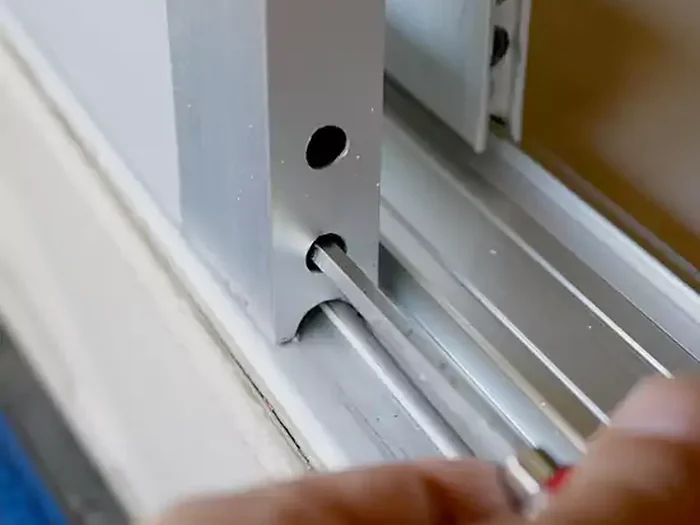
Inspecting the roller mechanism and track — the first step of any sliding door diagnosis
Sliding door repair is our flagship service — it is what we do every day. Whether you have a heavy aluminium patio slider that has started grinding across its track, a uPVC door that has dropped and no longer closes smoothly, or a timber-framed sliding door that has swollen with the seasons, our network of vetted independent specialists has the knowledge, tools, and parts to fix it.
We cover all frame materials: uPVC, aluminium, and timber, across all common sliding door configurations — two-panel, three-panel, and pocket sliders. Our specialists carry a wide range of rollers, locks, handles, and seals, so many repairs are completed in a single visit. When a more unusual part is needed, they will source the correct component and return to fit it, ensuring the repair is done properly rather than bodged with a near-fit substitute.
Every repair starts with a thorough diagnosis. A specialist will assess your door, identify the root cause of the problem — not just the symptom — and provide a clear, transparent quote before any work begins. There is no callout fee to pay upfront, and no obligation to proceed if you decide against the quote.
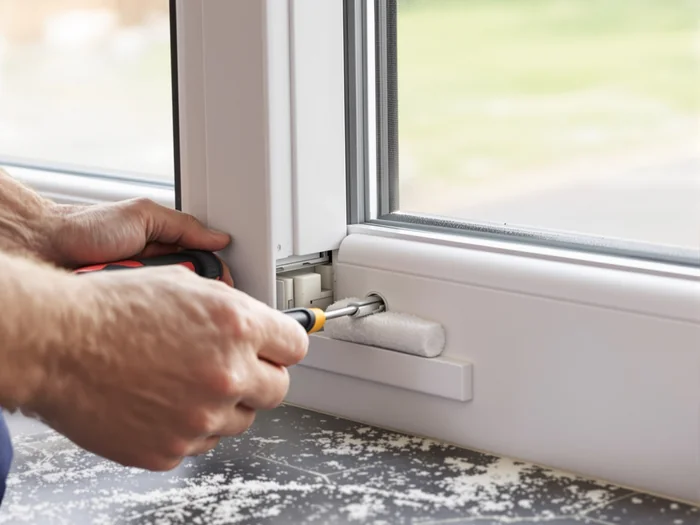
Lifting a door panel to access and inspect the rollers underneath — the first step of a roller replacement
Problems We Fix
From doors that have come completely off their track to those that simply will not slide as smoothly as they once did — our specialists have seen it all. The most common root cause is worn rollers, but lock alignment, seal degradation, and track damage are also frequent culprits. Each is diagnosed methodically and fixed with the right parts.
The detailed fault descriptions below cover the most frequent sliding door problems our network encounters across the UK. Click through to the linked services for in-depth coverage of specific repairs like roller replacement and glass replacement.
Door has come off its track
A sliding door coming off its track is alarming but usually repairable. The most common causes are worn or collapsed rollers that no longer grip the track properly, or an obstruction — often debris, a small stone, or a damaged section of track — that has caused the door to jump. Our specialists can refit the door, replace the rollers if needed, and inspect the track for damage. If the track itself is worn or bent, roller and track replacement may be required. See our roller and track replacement service for more detail.
Door is dragging, grinding, or hard to slide
This is one of the most common sliding door complaints and the most frequent repair our specialists carry out. The cause is usually worn rollers — the small wheels that carry the door's weight along the track. Over years of use, roller bearings degrade, the wheel surface flattens, and the door sinks slightly, causing it to drag on the track. In other cases, the track itself becomes clogged with dirt and debris, or the track surface develops grooves from years of roller contact. A thorough clean and roller replacement typically restores smooth, effortless sliding.
Door is stiff or difficult to operate
Stiffness can have several causes: the rollers may be worn but not yet collapsed, the track may need cleaning and lubrication, or the door frame may have shifted slightly due to thermal expansion or building settlement. For uPVC doors in particular, seasonal temperature changes can cause the frame to expand and contract, temporarily affecting how the door slides. A specialist assessment will pinpoint the exact cause rather than guessing — and the fix is often quicker and simpler than homeowners expect.
Door won't lock or the lock is broken
A sliding door that will not lock is a security risk and needs prompt attention. The fault could be in the lock mechanism itself (worn internal components, a broken key, or a jammed cylinder), or it could be an alignment problem — the door has dropped slightly so the lock tongue no longer aligns with the keep on the frame. Our specialists can diagnose the exact cause and carry out the repair, whether it is a simple alignment adjustment or a full lock replacement. See our lock replacement page for more information.
Gaps, draughts, and poor sealing
If you can feel cold air coming around your sliding door — or see daylight through a gap — the door seals have likely perished, compressed, or come loose. Worn seals not only make your home colder but also let in noise and, in exposed locations, driving rain. Replacing the seals is a straightforward job; our specialists carry common seal profiles and can replace them in a single visit. For doors where draughts are caused by misalignment rather than seal failure, adjusting the door position is often the fix.
Misted or cracked glass
Condensation between the panes of a double-glazed sliding door means the sealed unit has failed — the hermetic seal has broken, moisture has entered, and the unit can no longer provide the thermal insulation it was designed for. The good news is that the glass unit can be replaced without replacing the entire door frame. Our glass replacement specialists can measure, order, and fit a matching sealed unit. See our glass replacement service for details.
Sliding Glass Door Repair Near You
When homeowners search for "sliding glass door repair near me" or "sliding door repair near me," they are looking for a specialist who can get to them quickly, diagnose the problem accurately, and fix it without unnecessary delays or inflated costs. Our matching service is built around exactly that need.
Here is how the near-me matching works: you tell us your postcode and describe your door problem. We identify the vetted independent specialist in our network who covers your area and has the relevant experience for your door type and fault. That specialist contacts you directly to arrange a convenient appointment. Because they are local — based in or near your city — they can typically reach you quickly, and they know the common door types and typical faults found in properties in your area. This is not a national call centre dispatching whoever happens to be available; it is a targeted match with a local professional who knows the territory.
Our network covers 14 major UK cities, including Manchester, Birmingham, Leeds, Liverpool, Bristol, Sheffield, Newcastle, Nottingham, Leicester, Southampton, Brighton, Glasgow, Edinburgh, and Cardiff, plus their surrounding areas. If you are in or near any of these locations, we can connect you with a local sliding door repair specialist.
uPVC, Aluminium & Timber Sliding Doors
uPVC Sliding Doors
uPVC is the most common sliding door material in UK homes. uPVC sliding doors are generally lightweight and affordable, but they have specific failure patterns that our specialists know well. The most frequent issues are roller wear — the rollers in uPVC doors tend to be smaller and lighter-duty than those in aluminium systems, so they wear out faster — and gasket shrinkage, where the rubber seals around the door panel lose flexibility over time and stop sealing properly. uPVC doors can also go out of alignment as the frame expands and contracts with temperature changes. These are all repairable faults; a uPVC sliding door repair typically involves roller replacement, track cleaning, and gasket renewal, and the door is back to smooth operation.
Aluminium Sliding Doors
Aluminium sliding doors are stronger and more durable than uPVC, and they are common in newer homes and modern extensions. However, aluminium doors have their own repair needs. The track can wear over time — especially if debris has not been cleaned out regularly — and the rollers, while more robust than uPVC equivalents, still degrade after years of use. Older aluminium sliders from the 1980s and 1990s are particularly prone to track corrosion and roller seizure. The good news is that most aluminium sliding door faults are repairable: roller replacement and track refurbishment can bring an old aluminium door back to near-new performance, often for a fraction of what a replacement would cost.
Timber Sliding Doors
Timber sliding doors — often found in period properties and conservation areas — present a different set of challenges. Wood expands and contracts with humidity, which can cause the door to bind in its frame during damp weather and rattle loosely in dry conditions. The rollers and track on timber doors are often older designs, and replacement parts can be harder to source than for modern uPVC or aluminium systems. That said, our network includes specialists with experience in timber door repair who can assess whether the door can be adjusted and repaired or whether the frame timber itself needs attention. Timber sliding doors are often worth repairing rather than replacing because a well-made timber door can last for decades with proper maintenance.
Repair or Replace Your Sliding Door?
This is the question every homeowner with a faulty sliding door asks, and our answer is consistent: repair-first. The overwhelming majority of sliding door problems — sticking tracks, worn rollers, failed locks, perished seals, and even misted glass units — can be repaired without replacing the entire door. A repair typically costs a fraction of a full door replacement and extends the life of your existing door by years.
We only recommend replacement when it is genuinely the right choice. Replacement makes sense when the door frame is structurally damaged (for example, a severely warped uPVC frame or corroded aluminium frame that has lost its structural integrity), when the glass unit has failed and an exact match cannot be sourced, or when the door is single-glazed and you want to upgrade to modern double glazing for thermal efficiency. If your door is simply old but fundamentally sound — even if it dates from the 1990s — repair is almost always the better option.
Our specialists will always give you an honest assessment. They do not earn commission on replacement sales; they are independent tradespeople whose reputation is built on doing good work at a fair price. If a repair will sort the problem, they will tell you. If replacement is justified, they will explain exactly why and help you understand the options — including our new door installation service.
What a Repair Visit Looks Like
Diagnosis
The specialist arrives, inspects your door, and identifies the root cause of the problem. They will open and close the door, check the rollers and track, test the lock and handle, and look for any secondary issues you might not have noticed.
Quote
You get a clear, itemised quote explaining what needs doing, what parts are required, and the total cost. No hidden extras, no "while we are here" upselling — just an honest assessment and a fair price.
Repair
If you are happy with the quote, the specialist carries out the repair — often on the same visit if they have the necessary parts. They work tidily, protect your flooring, and clean up afterwards.
Test & handover
Once the repair is complete, the specialist tests the door thoroughly — sliding it open and closed several times, checking the lock engages smoothly, and confirming there are no draughts or gaps. They walk you through what was done and answer any questions you have about maintaining the door going forward.
Frequently Asked Questions
Common questions about this service from UK homeowners.
Available Across the UK
Our network of independent specialists covers 14 major UK cities and their surrounding areas — from Glasgow to Brighton, Cardiff to Newcastle.
In London? Visit our dedicated London specialists at sliding-door-repair-london.uk
Get Your Sliding Door Fixed Today
Free quotes from vetted local specialists — repair-first, no pressure, no obligation.