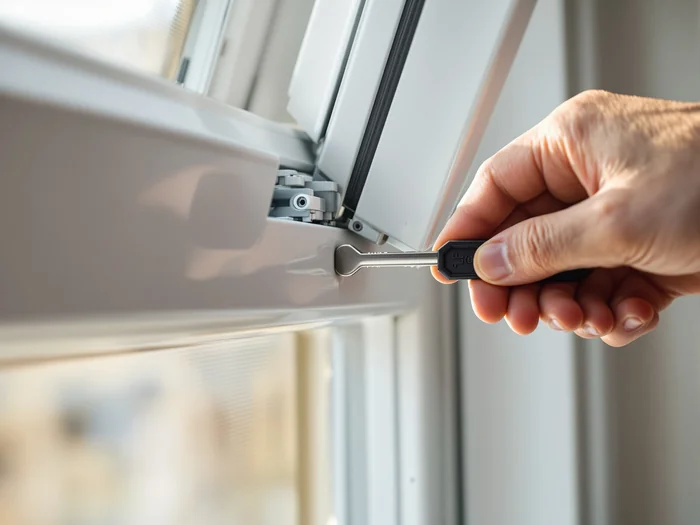
Adjusting a French door hinge — a small correction that stops the door catching
French Door Repair Across the UK
French doors are the classic choice for access to patios, gardens, and balconies — and their double-opening sided-hung design has been a feature of British homes for generations. Unlike sliding doors, French doors open outwards (or inwards) on hinges, which means the failure points are different: the hinges themselves, the multipoint lock mechanism along the meeting stile, and the seals between the two door leaves.
Our network of vetted independent specialists repairs French doors of all types — uPVC, aluminium, and timber — across 14 major UK cities. Whether your French doors have dropped and are catching on the frame, the multipoint lock has failed and you cannot secure your home, the glass unit has misted up, or there is a persistent draught coming through the gap between the two doors, we can match you with a local specialist who will diagnose and fix the problem properly.
Every repair follows our standard approach: a thorough diagnosis, a transparent quote before any work begins, and guaranteed workmanship on completion. No callout fee, no obligation, and no pressure to replace when a repair will do the job.
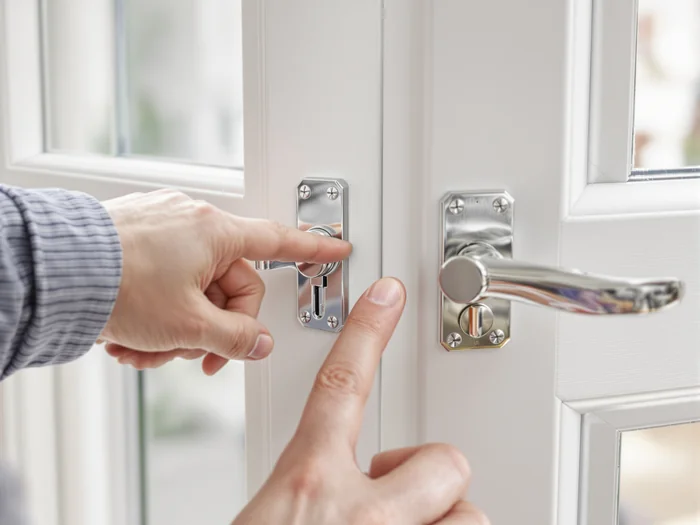
Checking the shootbolt keeps on French doors — essential for a secure multipoint lock
French Door Problems We Fix
From dropped doors that catch on the threshold to failed multipoint locks and draughty meeting stiles — these are the issues our specialists resolve every day.
Dropped door catching on the frame or threshold
French doors are heavy — each leaf carries a large double-glazed unit on just two or three hinges. Over years of use, the hinges settle slightly and the door drops, causing the bottom edge to catch or scrape on the frame or threshold. On uPVC French doors, this is usually fixed by adjusting the hinges — a straightforward job that lifts the door back to its correct position. On timber doors, the hinge screws may need tightening or the hinges may need replacing if they are worn beyond adjustment.
Doors will not meet or lock in the middle
When French doors refuse to close properly — one leaf sits proud of the other, or the doors meet but the lock will not throw — the problem is usually alignment. One or both doors have shifted slightly so the lock tongue no longer aligns with the keep on the opposite leaf. The fix involves adjusting the hinges to bring the doors back into alignment so the lock can engage cleanly. In some cases, the lock mechanism itself has failed internally and needs replacing.
Multipoint lock failure
French doors typically use a multipoint locking system: when you lift the handle, multiple locking points — hooks, rollers, and bolts — engage along the height of the door to secure it. When this mechanism fails — the handle goes floppy, the lock points will not engage, or the key will not turn — your door is insecure and needs prompt attention. Lock mechanism replacement is a specialist job because the new mechanism must match the door brand, profile, and backset dimensions exactly. See our lock replacement service for full details.
Misted or blown double glazing
Condensation between the panes of a French door's glass unit means the sealed unit has failed. The glass can be replaced without replacing the door frame — our specialists measure the unit, order a matching replacement, and fit it into the existing door. The same process applies if the glass is cracked. See glass replacement for more information.
Draughts around the meeting stile
The gap between the two French door leaves — the meeting stile — is a common source of draughts. The seals along the meeting edges compress over time, losing their ability to form a tight seal. Replacing these seals is a straightforward job. If the draught is caused by door misalignment rather than seal failure, hinge adjustment is the fix. A specialist will identify which it is. See seal and draught repair.
Worn or seized hinges
French door hinges carry the full weight of the door every time it opens. Over time, the hinge bearings wear, the door develops play, and you may hear creaking or feel resistance when opening. Seized hinges need lubrication; worn hinges need replacing. On uPVC doors, the hinges are adjustable flag hinges that bolt into the frame — replacement is usually straightforward. Timber door hinges are more traditional butt hinges which may need mortising into the frame.
uPVC French Door Adjustment
uPVC French doors account for the vast majority of French door installations in UK homes, and they have a consistent repair pattern. The flag hinges used on uPVC doors are designed to be adjustable — they have Allen key adjustment points for vertical height (to lift a dropped door), horizontal movement (to close gaps), and compression (to adjust how tightly the door seals against the frame). When a uPVC French door starts catching or letting in draughts, the fix is usually a hinge adjustment rather than a part replacement.
A specialist will work systematically through each hinge, first correcting the vertical position to lift the door off the threshold, then adjusting the horizontal position to ensure the door sits centrally in the frame, and finally checking the compression to achieve an even seal all around. Once the hinges are set correctly, they will check that the multipoint lock engages smoothly — a door that was previously difficult to lock should now operate easily because the lock tongue and keep are properly aligned.
While the adjustment process sounds simple, it requires experience to get right. Incorrect adjustment can make the door bind in a different place or prevent the lock from engaging, which is a security risk. Our specialists carry the specific tools for all common hinge types and have the experience to adjust French doors efficiently and correctly.
French Door Lock Replacement
French door multipoint locks are mechanically complex — a single mechanism operates multiple locking points simultaneously, driven by a gearbox in the centre. When the gearbox fails or the lock strips internally, the door may not lock at all, or it may lock but not unlock, leaving you unable to open or secure your door.
Replacing a French door multipoint lock is a skilled job. The specialist must identify the exact make and model of the existing lock — there are dozens of variants, and getting the wrong one means the locking points will not align correctly. They then remove the old mechanism, fit the new one, and adjust the lock strikes on the frame to ensure clean engagement. Once fitted, the new lock is tested thoroughly on both leaves. This is a supply-and-fit service: the specialist supplies the correct lock for your door and fits it in a single visit when the part is a common make.
For more detail on the lock replacement process, including the types of locks we replace and what to expect, see our dedicated lock replacement page.
French Door Glass Replacement
A misted French door pane — where condensation appears between the two layers of glass — means the sealed double-glazed unit has failed. The hermetic seal around the unit's edge has broken, moisture has entered, and the unit can no longer insulate properly. The fix is to replace the glass unit, not the door.
Our glass replacement specialists will measure the failed unit, order a matching replacement — correct thickness, correct spacer bar colour, correct glass specification — and fit it into the existing door. The door leaf is not removed; the specialist replaces the glass in situ, which minimises disruption. This is a significantly cheaper option than replacing the entire French door and restores both the clarity of the glass and the thermal performance of the door.
For more detail on glass replacement — including toughened glass, laminated glass, and obscure glass options — see our glass replacement service page.
French Door Repair Near You
Searching for "French door repair near me" or "French door repairs near me" connects you to our network of local independent specialists operating across 14 UK cities: Manchester, Birmingham, Leeds, Liverpool, Bristol, Sheffield, Newcastle, Nottingham, Leicester, Southampton, Brighton, Glasgow, Edinburgh, and Cardiff.
Provide your postcode and a description of your French door issue, and we match you with a vetted specialist in your area. Because they are local, they can typically reach you quickly and they understand the common door types and property styles in your region. Every repair starts with a free assessment and transparent quote.
Frequently Asked Questions
Common questions about this service from UK homeowners.
Available Across the UK
Our network of independent specialists covers 14 major UK cities and their surrounding areas — from Glasgow to Brighton, Cardiff to Newcastle.
In London? Visit our dedicated London specialists at sliding-door-repair-london.uk
Get Your French Doors Working Properly
Free quotes from vetted local specialists — repair-first, transparent pricing, no obligation.