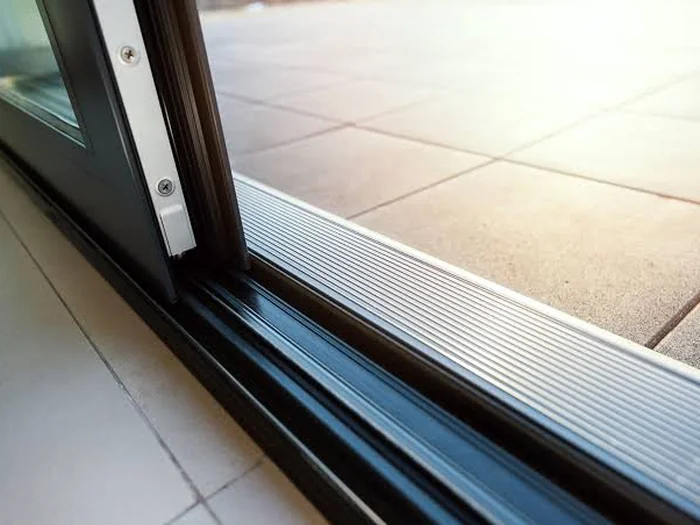
Fitting a new lock mechanism — supply-and-fit, correctly matched to your door
Sliding Door Lock Replacement Across the UK
A sliding or patio door that will not lock properly is more than an inconvenience — it is a security risk that needs prompt attention. Sliding door lock replacement is our most in-demand specialist service, because locks on heavily-used sliding doors wear out faster than almost any other component. Every time you lift the handle, twist the key, or slide the door closed against the keep, the lock mechanism absorbs the force. Over thousands of cycles, the internal gears, springs, and hook bolts degrade until one day the key will not turn, the handle spins without engaging, or the door simply will not lock at all.
Our supply-and-fit lock replacement service covers all sliding and patio door types: uPVC, aluminium, and timber frames, across sliding, patio, bifold, French, and tilt-and-slide configurations. One of our vetted local specialists will identify your lock type, supply the correct replacement — whether it is a simple hook lock, a full multipoint mechanism, or an upgrade to a more secure modern unit — and fit it properly. No guesswork, no "close enough" substitutes, and no separate trips to the hardware shop. The specialist brings the right lock and fits it on the spot in most cases.
Every lock replacement job starts with a diagnosis and a clear, itemised quote. There is no callout charge and no obligation. If you have been searching for a door lock for your sliding door or locks for sliding doors because you were planning to do it yourself, consider the supply-and-fit route: the lock will be correctly matched, professionally installed, and covered by a workmanship guarantee — often for less total cost than buying the lock, the tools, and spending a Saturday afternoon wrestling with a multipoint mechanism.
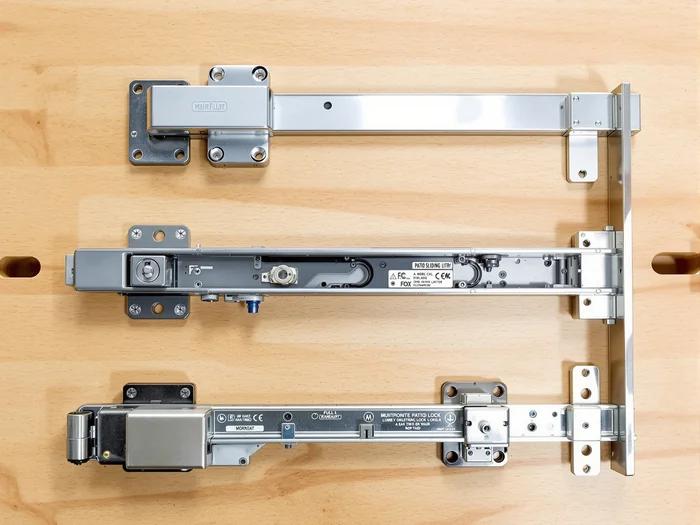
Common lock types: hook lock, multipoint strip, and mortice patio lock — identifying the right one matters
Supply & Fit Lock Replacement Service
Our lock replacement service is designed around one goal: your door locks properly again, with the minimum of fuss — correctly matched, professionally installed, guaranteed.
Our lock replacement service is designed around one goal: your door locks properly again, with the minimum of fuss. We know that when a patio or sliding door will not lock, every hour it stays unsecured feels like an hour too long. That is why our matching process prioritises speed: you tell us your postcode and describe the problem, and we connect you with a vetted local specialist who carries common lock types on their van and can typically reach you quickly.
The service covers all the door configurations in our network: sliding patio door lock replacement, French door lock replacement, bifold door lock replacement, conservatory door lock replacement, and tilt-and-slide door lock repair. The door type matters because the lock mechanism differs significantly between a sliding door (where the lock engages into a keep on the fixed panel or frame) and a French door (where a multipoint mechanism shoots bolts into the frame and the door meeting stile). Our specialists know these differences and will not attempt a "one size fits all" approach.
For homeowners searching specifically for uPVC patio door lock replacement, the specialist will assess whether the fault lies in the lock gearbox (the internal geared mechanism that the handle drives), the euro cylinder (where the key goes in), the hook bolts, or the keep plate on the frame. Often only one component has failed — replacing the entire multipoint strip is rarely needed — and a targeted repair is more cost-effective than a full mechanism swap. The specialist will diagnose the exact fault and quote accordingly.
Signs Your Sliding Door Lock Needs Replacing
Key will not turn, or turns with increasing difficulty
A key that gradually becomes harder to turn usually indicates a euro cylinder that is wearing out internally. The pins inside the cylinder degrade over time, especially in exterior doors exposed to damp and temperature changes. If the key turns freely when the door is open but jams when the door is closed, the issue is more likely alignment — the lock tongue is not lining up with the keep properly, which often means the door has dropped slightly. A specialist can distinguish between these two faults quickly.
Handle feels loose, floppy, or spins without resistance
A handle that spins freely without engaging the lock mechanism usually points to a failed gearbox inside the lock strip. The handle drives a series of internal gears that throw the locking bolts; when those gears strip or break, the handle loses its connection to the lock. In many cases, the gearbox alone can be replaced without changing the entire multipoint strip — which is considerably cheaper. If the handle itself is physically loose or wobbly but the lock still works, the issue may be the handle fixings or the spindle rather than the lock mechanism.
Door will not lock at all, even when closed firmly
If the door physically closes but the lock refuses to engage, the first check is alignment: has the door dropped, and is the lock tongue lining up with the keep? If alignment is fine, the fault is likely internal to the lock mechanism — a seized hook bolt, a broken internal spring, or a completely failed gearbox. This is a security-critical fault and should be treated as urgent; see our emergency repair service if you need immediate attention.
Lock engages but door still moves or rattles
A door that locks but can still be moved — even slightly — has a security gap. The cause may be worn hook bolts that no longer grip the keep tightly, a keep plate that has loosened over time, or a door that has dropped enough for the lock to engage only partially. This is often fixable with an adjustment and a replacement lock rather than a full door replacement.
Visible corrosion, damage, or weathering on the lock faceplate or keep
Exterior sliding doors face rain, condensation, and coastal air — all of which corrode lock components over time. If the faceplate is visibly rusted or the keep has corroded, the lock's internal components are not far behind. In coastal locations like Brighton or Cardiff, salt-laden air accelerates lock corrosion, and a stainless-steel replacement may be a sensible upgrade.
Types of Sliding & Patio Door Locks
A guide to the most common lock types found on UK sliding and patio doors. If you are trying to identify the right lock for your door — whether you plan to use our supply-and-fit service or simply want to understand what you are looking at — this section will help.
Hook Locks (Single-Point)
The most basic lock found on older sliding patio doors, particularly 1990s and early 2000s uPVC installations. A hook-shaped bolt throws from the door panel into a keep on the frame when the handle is lifted or the key is turned. Hook locks provide single-point security only — the door is held at one location — and are less secure than modern multipoint mechanisms. If your door has a single hook lock, upgrading to a multipoint mechanism (where the door profile allows it) significantly improves security. The specialist can advise whether an upgrade is possible for your specific door.
Multipoint Lock Mechanisms
The standard on modern sliding and patio doors, a multipoint mechanism runs the full height of the door panel and shoots locking bolts (hooks, rollers, or deadbolts) into multiple positions along the frame when the handle is lifted. Most multipoint strips incorporate a euro cylinder for key operation and a gearbox driven by the handle. When a multipoint mechanism fails, the problem is usually one specific component — the gearbox, the cylinder, or one of the individual locking points — rather than the entire strip. Identifying which component has failed is the specialist's first task, and it can mean the difference between a relatively inexpensive gearbox swap and a full strip replacement.
Mortice-Style Patio Locks
Found on some aluminium sliding doors and older timber patio doors, mortice locks are recessed into the door stile and operate with a key from both sides. They are simpler than multipoint mechanisms — typically a single deadbolt — and replacement is usually straightforward if the lock dimensions are known. The key measurement is the backset (the distance from the lock faceplate to the centre of the keyhole) and the case depth. A specialist can measure these from your existing lock and source a matching replacement.
How to Identify Your Lock
If you want to understand what type of lock you have before contacting us — or if you are researching replacement locks for sliding doors — start by photographing the faceplate on the edge of the door panel. A clear photo of the faceplate often carries a manufacturer name, part number, or dimensions that identify the lock. Measure the backset (centre of the keyhole or euro cylinder to the edge of the faceplate) and the spindle position (centre of the handle spindle to the top of the faceplate). These two measurements are the most important for matching a replacement. The construction of the lock body — whether it is a one-piece strip or a gearbox with separate locking points — will also guide the selection.
Patio Door Lock Security
Patio and sliding doors are known to be a vulnerable entry point in many UK homes, and upgrading the lock is one of the most effective security improvements you can make. Older sliding doors — particularly those with single hook locks — provide limited resistance to a determined forced entry attempt. A modern multipoint lock, by contrast, secures the door at multiple positions along its height, spreading the force of any attempted entry and making the door significantly harder to breach.
Beyond the lock mechanism itself, several additional security measures can be considered during a lock replacement visit. Anti-lift blocks prevent the sliding panel from being lifted out of its track from the outside — a known vulnerability on some older sliding door designs. Laminated glass, if you are also considering replacing the glass unit, is far harder to break through than standard toughened glass and provides an additional physical barrier. The specialist can talk you through which upgrades are compatible with your specific door and budget.
If your sliding door lock has failed completely and the door cannot be secured, treat this as an urgent situation. Our emergency repair service can connect you with a specialist quickly to make the door secure — even if that means a temporary lock until a full replacement can be fitted.
uPVC, Aluminium & Timber Doors — Lock Differences
uPVC Door Locks
The vast majority of UK sliding and patio doors are uPVC, and the lock market for these is well-established. Most uPVC patio doors use a multipoint strip mechanism that runs inside the door profile, accessible by removing the door panel from its track. Replacement lock strips for common brands are widely available, and many are compatible across different door manufacturers. The specialist will check the existing strip's dimensions — particularly the backset and the positions of the locking points — to source a direct replacement.
Aluminium Door Locks
Aluminium sliding doors — particularly those from premium manufacturers — often use proprietary lock systems that are not interchangeable with generic replacements. This means lock sourcing requires more care, and the specialist may need to identify the door manufacturer and order the correct part. Older aluminium sliders from the 1980s and 1990s may use mortice-style locks that are simpler to replace because the dimensions are standardised.
Timber Door Locks
Timber sliding and French doors often use surface-mounted or mortice locks that are selected during the door's construction. The lock type is driven by the door thickness and stile width. Replacement is usually possible, though the specialist may need to modify the mortice slightly if an exact dimensional match cannot be found. Timber door lock replacement is less common than uPVC, but our network includes specialists with the relevant joinery experience.
Lock Repair vs Replacement
Not every lock fault requires a full lock replacement — and a good specialist will tell you when a repair is the smarter choice. Many lock problems on uPVC patio doors, for example, are caused by a failed gearbox — the internal geared unit that the handle drives. Replacing the gearbox alone is significantly cheaper than replacing the entire multipoint strip, and it restores full lock function in the majority of cases. The gearbox is a bolted-on component; swapping it takes a specialist around 20 to 30 minutes.
Similarly, if the euro cylinder is the problem — the key is stiff, or the cylinder has been attacked — replacing just the cylinder is a straightforward job that leaves the rest of the mechanism intact. Euro cylinders come in different lengths (measured from the centre screw to each end), and the specialist will measure your existing cylinder to supply the correct size.
Full multipoint strip replacement is reserved for cases where the strip itself is damaged — for example, seized locking points that cannot be freed, or a strip that has been physically bent by a forced door — or where the existing lock is so old that a direct replacement gearbox is no longer available. For a deeper look at handling costs, see our handle replacement page (handle faults and lock faults often present similarly), or visit our pricing page for qualitative cost guidance across all service types.
Lock Replacement Near You
When your sliding door will not lock, you want a specialist who can get to you quickly — someone local who knows the area and carries the right parts. Our matching process does exactly that. Tell us your postcode, describe your door and the lock problem, and we will connect you with a vetted independent specialist covering your location. They will contact you to arrange a visit at a time that works for you.
Our network spans 14 major UK cities and their surrounding areas: Manchester, Birmingham, Leeds, Liverpool, Bristol, Sheffield, Newcastle, Nottingham, Leicester, Southampton, Brighton, Glasgow, Edinburgh, and Cardiff. If you are searching for sliding glass patio door lock replacement near any of these locations, use our matching service to reach a local professional. If you are in London, please visit our sister site at sliding-door-repair-london.uk for dedicated London coverage.
Frequently Asked Questions
Common questions about this service from UK homeowners.
Available Across the UK
Our network of independent specialists covers 14 major UK cities and their surrounding areas — from Glasgow to Brighton, Cardiff to Newcastle.
In London? Visit our dedicated London specialists at sliding-door-repair-london.uk
Get Your Door Lock Fixed Today
Supply-and-fit lock replacement from vetted local specialists — free, no-obligation quotes.