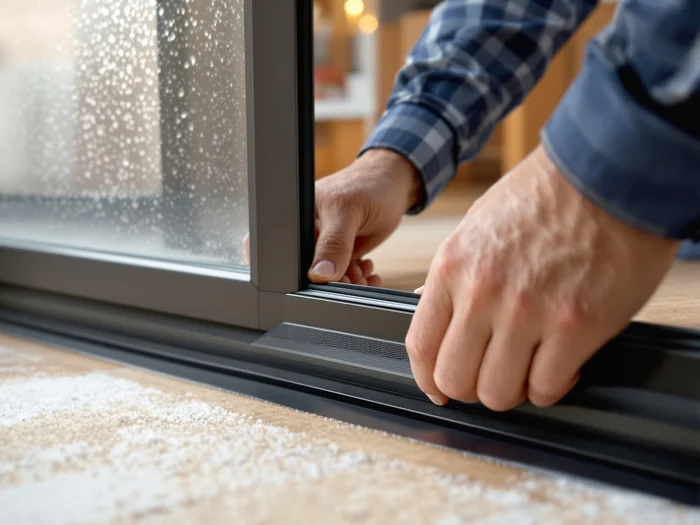
Fitting a new draught seal — one of the most cost-effective comfort improvements
Sliding Door Seal & Draught Repair
Worn door seals are a quiet thief of home comfort. You might not see them failing — the rubber gradually shrinks, the brush pile slowly compresses — but you feel the effects: a cold draught around the door on a winter evening, a whistle of wind when it is blowing outside, a patch of condensation near the door frame, or a heating bill that seems higher than it should be. In exposed locations, failed seals can let in driving rain, causing damp patches on the floor or carpet near the door.
Door seal replacement is one of the most cost-effective repairs you can make to a sliding or patio door. The seals themselves are inexpensive; the specialist's time is the main cost, and most seal replacements are completed in a single visit lasting an hour or so. The improvement is immediate: once the new seals are in place, the draughts stop, the door closes with a satisfying solid feel rather than a rattle, and the room stays noticeably warmer. For many homeowners, a £100-200 seal replacement delivers more comfort improvement than any other single repair.
Our seal replacement service covers sliding doors, patio doors, French doors, bifold doors, and conservatory doors — all frame materials, all seal types. The specialist identifies the exact seal profile your door requires, sources the matching replacement, cleans the seal grooves, and fits the new seals.
Seal Replacement Service
The specialist visits, inspects all the seals around your door — the bottom, the sides, the top, and the meeting stile if it is a French or bifold door — and identifies which have failed. In many cases, the bottom seal (the one that takes the most punishment from foot traffic, debris, and water) is the first to go, while the side seals may still be serviceable. There is no pressure to replace seals that are still in good condition; you only pay for what needs doing.
The old seals are removed, the grooves are cleaned of dirt and old adhesive, and the new seals are fitted — either pushed into a groove (gaskets on uPVC) or stuck into place (adhesive-backed seals on some aluminium and timber doors). The door is then closed and tested around the full perimeter to confirm the draught is gone and the door operates smoothly.
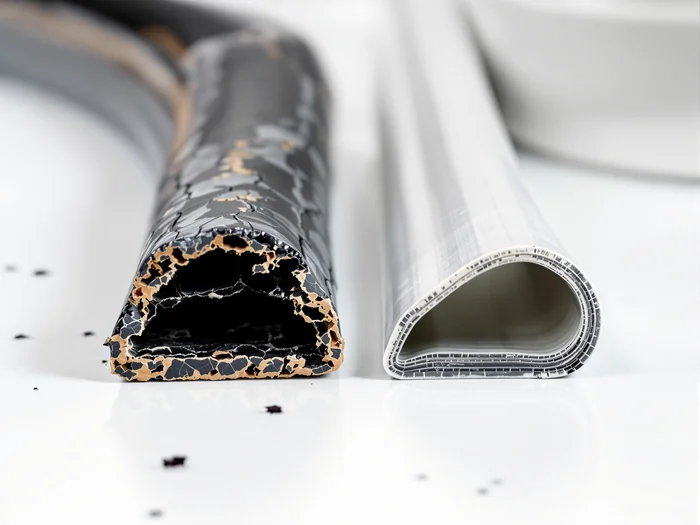
Old perished seal vs new — the difference in draught-proofing is immediate and noticeable
Signs Your Seals Have Failed
From cold draughts to whistling wind noise — here are the telltale signs that your door seals have reached the end of their useful life.
Cold draughts around the door
The most obvious symptom. On a cold day, run your hand slowly around the door perimeter — you will feel cold air coming through wherever the seal has failed. Pay particular attention to the bottom corners, which often fail first.
Whistling or wind noise
On windy days, failed seals can create a whistling sound as air is forced through a narrow gap. This is most noticeable on upper-floor sliding doors and doors facing prevailing winds.
Water ingress during heavy rain
If water appears on the floor near your sliding door after rain, the bottom seal or the drainage channels may be at fault. The specialist will check both.
Visible cracking, shrinking, or flattening of the rubber
Inspect the seals visually: if the rubber looks cracked, has pulled away from the corners (shrinkage), or is flattened where the door panel makes contact, the seals have reached the end of their useful life.
Higher heating bills or a room that feels colder than it should
This is the cumulative effect of multiple failed seals or a single large gap. The heat lost through a poorly sealed door adds up over a winter — and replacing the seals is one of the cheapest energy-efficiency improvements you can make.
Types of Door Seals
If you have been searching for sliding door seals, patio door seals, or sliding glass door seal replacement to understand what type your door uses, this guide will help.
Brush Pile Seals (Sliding Doors)
Found on the vertical edges of most sliding door panels, brush pile consists of fine nylon or polypropylene fibres set into a plastic backing strip. The fibres are flexible enough to form a seal while still allowing the door to slide. Over time, the pile compresses and the fibres wear, reducing the seal effectiveness. Brush pile is available in different pile heights and backing widths; the specialist will match the existing dimensions.
Rubber Gaskets / E-Strip (uPVC Doors)
The most common seal on uPVC doors, these are flexible rubber or EPDM profiles that push into a groove on the door frame or panel. The profile is often an "E" shape in cross-section (hence "E-strip") or a bubble shape that compresses when the door closes. EPDM rubber is preferred for replacement because it resists UV degradation and stays flexible in cold temperatures better than older PVC-based rubbers.
Bubble Gaskets
A variation of rubber gasket with a hollow circular or D-shaped profile that compresses evenly to form an airtight seal. Common on modern uPVC doors and particularly effective at stopping draughts because the hollow profile provides more compression range than a solid strip.
Bifold Compression Seals
Bifold doors use compression seals that are compressed when the doors are closed and folded. These seals are often proprietary to the door manufacturer, and identification requires care. The seal on the bottom edge of bifold doors is particularly prone to wear because it contacts the threshold every time the door is operated. See our bifold door repair page for more information on bifold-specific issues.
Identifying the Right Profile
Seal profiles are not standardised across manufacturers. The cross-sectional shape, the width of the backing strip, the height of the seal, and the material all vary. The most reliable identification method is to remove a small section of the existing seal — a specialist can match it from a sample. Generic "universal" seals sold online are a gamble: they may fit, they may not, and if they do fit they may not seal as effectively as the correct profile.
Draught-Proofing & Energy Efficiency
Worn door seals do not just make a room feel cold — they allow warm air to escape and cold air to enter, forcing your heating system to work harder. In a UK home, a sliding or patio door with perished seals can be a significant source of heat loss, particularly in older properties where the door may be the largest single glazed area in the room.
Seal replacement is one of the cheapest energy-efficiency improvements you can make to your home, alongside loft insulation and draught-proofing windows. The materials cost is low, the labour is straightforward, and the improvement in thermal comfort is immediate. If you are considering seal replacement alongside other door repairs — such as roller replacement or glass replacement — combining the work can be more efficient than scheduling separate visits.
Seal Replacement Near You
If you are feeling cold draughts around your sliding or patio door, searching for "sliding glass patio door seals" or "patio door draught excluder" and wondering whether to tackle it yourself — use our matching service instead. A vetted local specialist will identify the correct seal profile, supply it, and fit it properly, and the cost is often lower than you might expect. Tell us your postcode and describe the draught problem, and we will connect you with the right specialist.
Frequently Asked Questions
Common questions about this service from UK homeowners.
Available Across the UK
Our network of independent specialists covers 14 major UK cities and their surrounding areas — from Glasgow to Brighton, Cardiff to Newcastle.
In London? Visit our dedicated London specialists at sliding-door-repair-london.uk
Stop Draughts & Stay Warm
Seal replacement from vetted local specialists — quick, affordable, immediate comfort improvement.