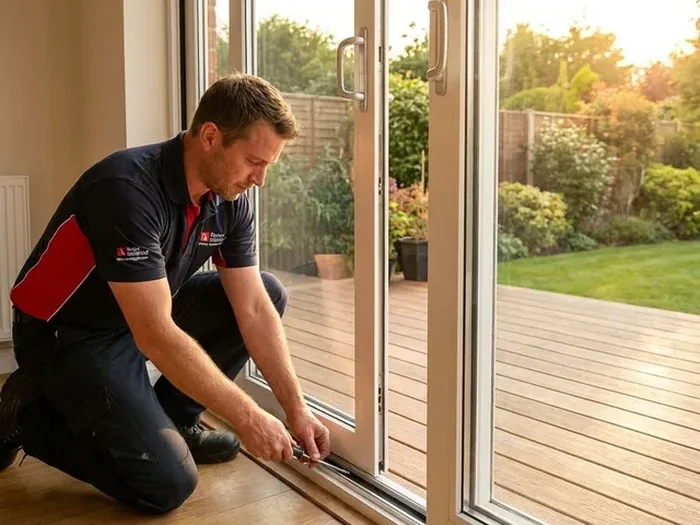
Inspecting the roller track and adjustment points on a patio door
Blog · Troubleshooting Guide
Sliding Door Troubleshooting: Fix a Stuck, Dragging or Jammed Door
Your sliding or patio door has started playing up. Maybe it drags and you have to put your shoulder into it. Maybe it will not lock properly. Maybe it is stuck completely and will not budge. Before you panic or start pricing up a replacement, work through this guide. Many sliding door problems have simple causes and — with care — simple fixes. But we will also be honest about when to put the tools down and call a specialist, because glass doors are heavy and getting it wrong can be expensive.
Important Safety Note
Sliding door panels are heavy. A typical uPVC patio door panel weighs 25kg to 40kg; a large aluminium slider can weigh 60kg or more. The glass in these doors is toughened safety glass — tough, but not unbreakable, and if it breaks it shatters into thousands of small pieces. Never attempt to remove a door panel from its frame on your own. If any part of the repair involves taking the door off its track, removing glass, or working on the locking gearbox, get a specialist. The DIY guidance below covers cleaning, simple adjustments, and lubrication only — work you can do with the door in place.
Diagnose the Symptom
Before you do anything, identify what the door is actually doing. The symptom tells you where the problem is — and whether it is a DIY fix or a specialist job.
Dragging / grinding / hard to slide = Rollers or track
This is the most common sliding door complaint. The door has become progressively harder to open, you hear a grinding or scraping sound, and you need two hands where one used to do it. The cause is almost always worn or dirty rollers, or debris in the track. If cleaning and lubricating the track does not improve things, the rollers themselves are likely worn flat and need replacing — see our roller replacement service.
Won't lock / handle turns but door not secure = Lock or gearbox
If the key turns but the lock hooks do not engage, or the handle spins without resistance, the gearbox inside the lock mechanism has likely failed. A gearbox converts the rotation of the handle into the linear movement that pushes the lock hooks into the frame keeps. When the internal gearing strips or snaps, the handle turns but nothing happens. This requires replacement — see lock replacement. If the lock engages but the door still feels loose, the keeps may need realignment.
Stuck completely / won't move at all = Track obstruction, failed rollers, or frame settlement
A door that will not slide at all is usually suffering from one of three things: something is physically blocking the track (a stone, a child's toy, a build-up of compacted dirt), the rollers have failed completely and the door is resting on the track, or the building has settled enough to pinch the frame — common in older properties on clay soil. Clear the track thoroughly first. If the door still will not move, do not force it. Forcing a stuck slider can damage the frame, the glass, or both.
Draughts / whistling / water ingress = Seals
Cold air coming through a closed door, or water pooling on the interior sill after heavy rain, indicates failed seals. The brush pile strip along the bottom, the rubber gasket around the frame edges, or the interlock seal where the two panels meet may have perished, shrunk, or detached. Seal replacement is one of the cheapest and most effective door repairs — see seal replacement.
Safe DIY Steps
These are things you can do without removing the door from its frame. They address the most common causes of sliding door problems and are safe for a competent DIYer.
1. Clean the Track
This sounds obvious, but you would be surprised how many "broken" sliding doors are just riding on a track full of compacted dirt, pet hair, and garden debris. Vacuum the track thoroughly — use the crevice tool to get into the corners. Then wipe the track with a damp cloth. Pay special attention to the areas where the rollers sit when the door is closed; debris accumulates there because the door does not sweep over it. If the track has a drainage slot (most external doors do), check that it is not blocked — a blocked drain can cause water to pool on the track and accelerate corrosion.
2. Lubricate — with the Right Product
Use a silicone-based lubricant spray — not WD-40, not oil. WD-40 is a water displacer and solvent, not a long-term lubricant, and it can attract dust that gunks up the track. Oil-based lubricants turn sticky over time and collect debris. A dry silicone spray lubricates without leaving a sticky residue. Spray a light coat along the track and work the door back and forth to distribute it. For the lock mechanism, a graphite powder lubricant (the kind used for car door locks) is ideal — it lubricates without attracting dirt.
3. Check and Adjust the Keepers
The metal plates in the door frame that the lock hooks engage into are called keeps or strikers. If the door has dropped slightly, the hooks may no longer line up with the keeps, which stops the lock engaging. Look at the keeps — they usually have a small amount of vertical adjustment via elongated screw slots. Loosen the screws slightly, reposition the keep so the lock hook engages cleanly, and retighten. This is a five-minute fix that can solve a "door won't lock" problem.
Adjusting a Patio Door: Step by Step
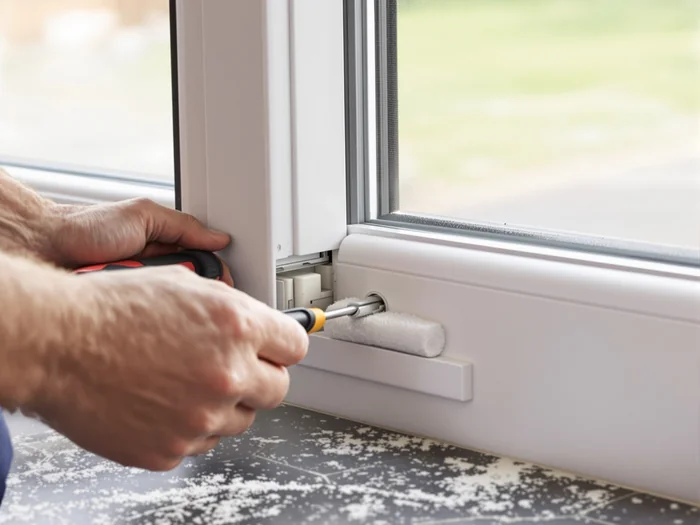
Turning the roller adjustment screw to raise a dragging sliding door
This is the single most searched sliding door query — around 720 searches a month in the UK — and for good reason: a dragging door is a daily irritation that worsens over time. Here is how to adjust it.
Locate the adjustment screws
Look at the bottom edge of the sliding panel. You will see small plastic caps or access holes near each corner. Pop off the caps (they usually prise out with a flathead screwdriver) to reveal the adjustment screws underneath. On most uPVC patio doors, these are Allen key (hex) screws. On some older aluminium doors, they may be slotted screws. If you are unsure, take a photo with your phone's flash on and zoom in — it should be clear what tool you need.
Insert the correct tool fully
Use the correct size Allen key or screwdriver. An undersized tool will round off the adjustment screw, and then you have a bigger problem. Insert it fully into the screw head before applying any force.
Adjust in small increments
Turn the screw clockwise to raise the door, anticlockwise to lower it. Adjust in quarter-turn increments only. After each adjustment, slide the door back and forth to test. The goal is to raise the door just enough so the rollers carry the load cleanly without the door scraping the bottom track, but not so high that the top of the door rubs against the top frame. If you raise it too far, the lock hooks will no longer line up with the keeps and the door will not lock — which is why small increments are critical.
Adjust both sides evenly
If only one corner is scraping, you may need to adjust one side more than the other, but as a starting point, make equal adjustments to both corners. Uneven adjustment can tilt the door and cause the lock to misalign.
Test the lock
After adjusting, close the door and try the lock. If it does not engage smoothly, you may have raised the door too high — try lowering it slightly. If the lock worked before adjustment and does not work after, undo your last quarter-turn and test again.
If the adjustment screws are at their limit: If you have turned the screws as far as they go and the door still drags, the rollers themselves are worn and need replacing. Roller replacement requires removing the door from the frame, which — given the weight — is specialist work.
When to Stop and Call a Specialist
There are clear lines where DIY stops being sensible. Here is when to put the tools down:
- The door needs to come off its track. Sliding door panels are heavy, and the risk of dropping one — shattering the glass and possibly causing injury — is not worth the money you might save on labour. If the rollers or track require the door to be removed, get a specialist.
- The gearbox has failed. Replacing a patio door gearbox involves disassembling the lock mechanism — not a beginner-level task. A specialist can swap a gearbox in under an hour and will have the correct replacement part.
- The glass needs replacing. A misted or cracked double-glazed unit requires measuring the exact thickness and dimensions, ordering the correct specification (toughened safety glass for doors is required under UK Building Regulations), and safely removing and refitting a heavy glass panel. This is specialist-only work.
- The frame is damaged or the building has settled. A door that has become stuck because the frame is pinched by building movement is a structural issue, not a door-repair issue. You need a specialist to assess whether the door can be adjusted to accommodate the settlement, or whether more significant work is required.
Mid-article takeaway: Most dragging, sticking and minor locking problems respond to cleaning, lubrication and simple roller-height adjustments. If those steps do not work, do not escalate to more aggressive DIY — escalating to a specialist is the smarter move. The cost of a professional repair is almost always less than the cost of replacing a door you damaged by overreaching.
Get a Free QuotePreventive Maintenance: Keep Your Door Running Smoothly
The best way to avoid most sliding door problems is a few minutes of maintenance twice a year. Here is a simple routine:
- Spring and autumn: Vacuum the track, wipe it clean, and apply a light silicone spray. Check the drainage slots are clear.
- Before winter: Inspect the seals — look for cracks, shrinkage, or gaps. Run your hand along the closed door on a cold day; any draught you feel is a seal that needs attention.
- Twice a year: Lubricate the lock mechanism with graphite powder or dry PTFE spray. Do not use oil-based products in the lock — they congeal in cold weather.
- Monthly visual check: Look at the track when the door is open. Any metal shavings or black powder residue suggests roller wear. Catching worn rollers early means a simpler, cheaper replacement.
For a deep dive on seals and energy loss through sliding doors, see our energy efficiency guide. And if your door has reached the point where multiple components are failing, see the cost guide for repair-vs-replace economics.
Frequently Asked Troubleshooting Questions
How do you adjust a sliding glass door that is dragging?
Most sliding doors have adjustment screws at the bottom edge of the panel — usually accessible through small access holes near each corner. Using the correct size Allen key or screwdriver, turn the adjustment screw clockwise to raise the door or anticlockwise to lower it. Adjust both sides in small increments (quarter turns) and test the door's movement after each adjustment. The goal is to raise the door so the rollers carry the weight cleanly without the door scraping the track, but not so high that the top of the door rubs the frame. If the adjustment screws are seized, corroded, or already at their limit, the rollers themselves may need replacing — which is a job for a specialist given the weight of glass doors.
Why won't my patio door lock?
The most common reasons a patio door won't lock are: misalignment between the lock hooks and the keeps (the metal plates in the frame that the hooks engage into), a failed gearbox (the key turns but nothing moves inside the mechanism), or a broken lock hook. First, check that the door is fully closed and that nothing is obstructing the track. If the door is closed but the lock will not engage, the keeps may need realigning. If the handle turns freely without resistance, the gearbox has likely failed internally — this requires replacement by a specialist. Do not force the handle, as this can snap the spindle and turn a gearbox-only job into a handle-plus-gearbox job.
Can I fix a sliding door that has come off its track myself?
Lifting a sliding door back onto its track is physically demanding and carries glass-breakage risk. A standard uPVC patio door panel can weigh 25kg to 40kg; a large aluminium slider can weigh considerably more. If the door has simply jumped the track because it was lifted or knocked, and the rollers and track are otherwise undamaged, a competent DIYer with a second person to assist may be able to tilt the panel back into position — but only after inspecting the rollers to confirm they are intact and the track is clear of debris. If the rollers have failed (worn flat, seized, or broken) and that is why the door came off, replacing them requires removing the door from the frame entirely, which is specialist work. Given the weight and the cost of replacement glass if the panel is dropped, our recommendation is to get a specialist to refit and assess the door.
Still stuck? Get a specialist to sort it.
If the DIY steps did not solve the problem — or if you would rather skip straight to a professional fix — tell us what is wrong and where you are.