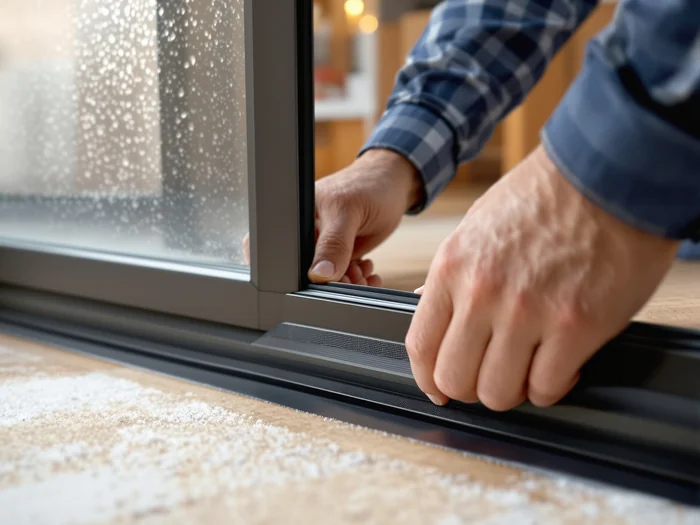
Fitting a new rubber seal strip to improve sliding door draught-proofing
Blog · Energy Efficiency Guide
Energy Efficient Sliding Doors: Cut Heat Loss and Bills
A sliding or patio door is the largest single glazed area in most UK rooms. On a cold day, you can feel the chill radiating off the glass before you even get close — and if the seals are worn, you can feel the draught whistling through the gaps. Improving the energy performance of your sliding doors does not necessarily mean replacing them. Often, the most effective steps are the simplest and least expensive. This guide explains where sliding doors lose heat, what you can do about it, and when replacement genuinely makes sense.
Where Sliding Doors Lose Heat
A sliding or patio door loses heat through four main pathways, and understanding them helps you prioritise which fixes will give you the biggest improvement for the least cost.
1. Failed or Worn Seals (Air Leakage)
This is the number one heat-loss pathway for most existing sliding doors, and the cheapest to fix. The brush pile strip along the bottom, the rubber gasket around the frame edges, and the interlock seal where two panels meet all degrade over time. Rubber hardens and shrinks; brush pile wears flat; compression seals lose their spring. The result is uncontrolled air movement — cold air coming in, warm air escaping — that a healthy seal would stop. Replacing the seals is typically a £70–£150 job and can transform how a room feels on a cold day. See seal replacement for details.
2. Failed Double-Glazed Units (Conduction & Radiation Loss)
When a sealed double-glazed unit fails — the telltale sign is misting or condensation between the panes — its insulating performance drops. The gap between the panes, which should be filled with dry air or argon gas, now contains moisture-laden air that conducts heat more readily. Even before visible misting appears, an ageing unit with a degraded edge seal will perform below its original specification. Replacing a failed unit not only clears the view but restores the door's thermal performance. If you are replacing glass anyway, upgrading to a low-E specification is worth considering — see the glazing section below. For unit replacement, see glass replacement.
3. Frame Conduction (Thermal Bridging)
The door frame itself conducts heat. Aluminium is a good conductor — which is why modern aluminium door frames include a thermal break (a non-conductive barrier between the inner and outer frame sections) to reduce this. Older aluminium sliders — particularly those from before the mid-2000s — may not have a thermal break, and the frame can feel cold to the touch in winter. uPVC frames conduct less heat than aluminium by nature of the material, though they can still feel cold if the seals around the frame perimeter have failed. There is no retrofit fix for a frame without a thermal break — if this is your door's main weakness, replacement may be the most effective route.
4. Single Glazing (Obsolete but Still Out There)
Single-glazed sliding doors still exist in some older UK homes — particularly original timber sliders in Victorian and Edwardian properties. A single pane of glass has roughly half the insulating value of even a basic double-glazed unit. If your door is single-glazed and the frame is sound, replacing just the glass with a double-glazed unit (if the frame can accommodate the thickness) is the single biggest thermal upgrade possible. If the frame cannot accept a double-glazed unit — common with older timber doors that were designed for thin single glazing — replacement of the entire door may be the only practical route to a meaningful efficiency improvement.
Fix the Seals First
If your sliding door has draughts — and the door is otherwise structurally sound and the glass is clear — replacing the seals is almost certainly the best first step. It is inexpensive (£70–£150), quick (typically done in one visit), and the difference in room comfort can be immediately noticeable.
The seals on a sliding or patio door take a beating. The bottom brush pile strip is in constant contact with the track; the frame gaskets are compressed every time the door closes; the interlock seal between the sliding and fixed panels scrapes against itself with every operation. Over five to ten years — faster in exposed locations or coastal areas — the rubber degrades, the brush pile flattens, and the seal's ability to block air movement diminishes to near zero.
The test is simple: on a cold or windy day, run your hand slowly along the edges of a closed door. If you feel cold air, the seal at that point has failed. You can also check visually — look for gaps, cracks in the rubber, or brush pile that has worn down to the backing strip. If the seals are visibly degraded, replacement will make a meaningful difference.
For properties in particularly draughty locations — exposed hillsides, coastal positions, properties in cities like Sheffield or Edinburgh where wind chill is a real factor — even small seal gaps translate into noticeable cold spots. Draught-proofing an existing sliding door in these locations can be one of the most cost-effective comfort improvements available.
Glazing Upgrades: Low-E, Argon & U-Values Explained
If your double-glazed units are misted and need replacing anyway — or if you are planning to keep the door for many years and want to maximise its thermal performance — upgrading the glass specification is worth considering. Here is what the terms mean in plain English:
Low-E (Low-Emissivity) Coating
A microscopically thin, transparent metallic coating applied to one surface of the glass. It reflects heat back into the room while letting sunlight through. A low-E coating can reduce the U-value (the measure of heat loss — lower is better) of a double-glazed unit by around 20–30% compared to uncoated glass. Most modern double-glazed units include a low-E coating as standard, but if your units are 15-plus years old, they may not have one.
Argon Gas Fill
The gap between the glass panes in a sealed unit can be filled with air or with argon gas. Argon is denser than air, so it conducts heat less readily — improving the unit's U-value. Over time (typically 15–25 years), argon can slowly diffuse out through the edge seal, which is one reason older units lose thermal performance even before visible misting appears. When replacing units, specifying argon fill is a modest cost upgrade that delivers a measurable thermal improvement.
Warm-Edge Spacer Bar
The spacer bar is the strip around the perimeter of a sealed unit that separates the two panes of glass. Traditional spacer bars are aluminium, which conducts heat and creates a cold strip around the edge of the unit — this is why the perimeter of a double-glazed unit sometimes feels colder than the centre. A warm-edge spacer, made from a less conductive material, reduces this perimeter heat loss and improves the overall U-value of the unit.
The cost of upgrading from a basic double-glazed unit to one with low-E coating, argon fill, and a warm-edge spacer is an incremental addition to the glass replacement cost — typically £30–£60 extra per unit depending on size. Given that you are already paying for the labour to replace the unit, the marginal cost of the upgrade is modest relative to the long-term thermal benefit.
For a full breakdown of glass replacement costs, see our glass replacement page and the cost guide.
uPVC vs Aluminium: Thermal Performance
There is a common belief that uPVC doors are more energy efficient than aluminium doors. This is partly true and partly outdated. uPVC is a poorer conductor of heat than aluminium — that is a material fact. A basic aluminium frame without a thermal break will conduct significantly more heat than a uPVC frame of the same dimensions, and in cold weather the inner surface of the aluminium frame will feel cold to the touch and may even attract condensation.
However, modern aluminium door systems — essentially all aluminium bifolds and sliders sold into the UK market today — incorporate a thermal break: a non-conductive barrier (typically a reinforced polyamide strip) inserted between the inner and outer aluminium profiles. This thermal break dramatically reduces heat conduction through the frame. A contemporary aluminium door with a thermal break and a good-quality glass unit can achieve U-values comparable to a uPVC door of similar specification.
The practical takeaway: if you are buying new doors, both uPVC and modern thermally-broken aluminium systems can deliver good thermal performance — the glass specification and the installation quality matter more than the frame material. If you have an older aluminium sliding door (pre-2005-ish) and the frame feels cold in winter, it may not have an effective thermal break — and in that case, replacing the door with a modern system will deliver a noticeable thermal improvement alongside all the other benefits of a new installation. Our installation service can provide quotes for full door replacement when the time comes.
Draught-Proofing an Older Sliding Door
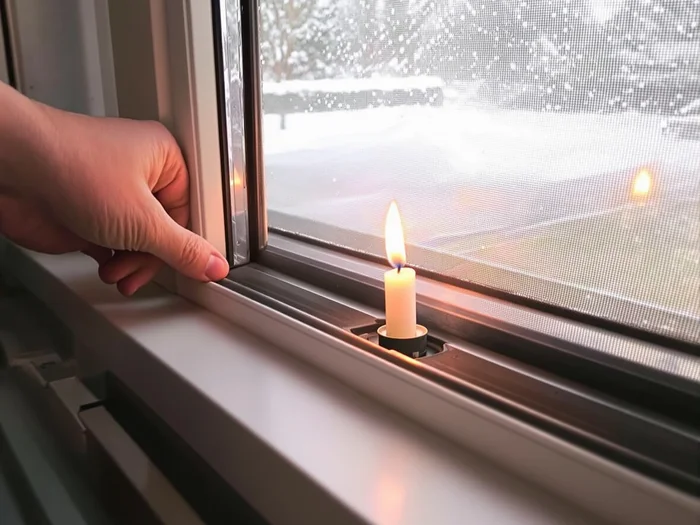
Checking for draughts at the base of a patio door
If your sliding door is older — particularly a timber-framed slider from the 1970s or 1980s, or an early-generation uPVC patio door — it may have been fitted with seals that have long since perished, or it may have been designed with minimal sealing to begin with. Draught-proofing an older door is not just about comfort; it is about reducing heat loss in a way that pays for itself in lower energy bills.
A specialist can replace the existing seals with modern equivalents — brush pile strips for the bottom track, EPDM rubber gaskets for the frame perimeter, and compression seals for the interlock between panels. The materials are inexpensive; the labour is the bulk of the cost. For older timber sliding doors — the kind you find in period properties — a specialist can often rout new seal grooves into the frame and fit modern compression seals, dramatically improving the door's draught-proofing without altering its appearance or character.
For the budget-conscious DIY route: adhesive-backed foam or rubber seal strips from a hardware shop can provide a temporary improvement. They are not a long-term solution — they compress, peel, and degrade faster than factory-fitted seals — and they can make the door harder to close if they are too thick. But if you need a draught-stop for the winter while you plan a proper repair, they can help. Just do not rely on them as a permanent fix.
Mid-article takeaway: Replacing worn seals is the most cost-effective energy upgrade for any existing sliding or patio door. It costs £70–£150, takes about an hour, and the improvement in comfort — no more cold draughts, no more whistling, no more water ingress — is immediate. Before you spend thousands on a new door, spend £100 on new seals and see if that solves the problem. In most cases, it will.
Get a Free QuoteWhen Replacement Pays
This guide has emphasised repair and upgrade over replacement because, in most cases, that is the better value and lower-impact route. But there are situations where replacement genuinely makes more sense — for energy performance and for practicality:
- Single glazing with no upgrade path. If the frame cannot physically accept a double-glazed unit, you are stuck with single glazing — and replacing the door is the only way to achieve modern thermal performance.
- Frame without a thermal break. Older aluminium frames that lack a thermal break will always conduct more heat than a modern thermally-broken frame. There is no retrofit fix.
- Multiple blown units. If three or four glass units in a bifold door are misted, the cumulative replacement cost starts to approach a meaningful fraction of a new door — and a new door comes with a fresh warranty on everything.
- Frame degradation. A uPVC frame that has gone brittle, discoloured, or warped after 30-plus years of UV exposure has reached the end of its service life. At that point, replacement is the right call — and you get the efficiency gain as a bonus.
The key is to make the replacement-versus-repair decision based on a specialist assessment, not on a sales pitch. Our platform connects you with repair-first specialists who will give you an honest recommendation — if repair is viable, they will tell you; if replacement genuinely makes more sense, they will explain why. For a detailed breakdown of costs on both sides of that equation, see our cost guide and bifold vs sliding comparison.
Frequently Asked Energy Efficiency Questions
How much heat is lost through sliding patio doors?
Sliding and patio doors represent a large glass area in most rooms, and even a good-quality double-glazed door will lose more heat per square metre than an insulated cavity wall. The exact amount depends on the glass specification, the frame material, and — critically — the condition of the seals. A door with worn or missing seals will lose significantly more heat through uncontrolled air leakage than through the glass itself. This is why replacing perished seals is one of the most cost-effective energy improvements you can make to an existing sliding door — it addresses the major heat-loss pathway (draughts) for a relatively modest cost (£70–£150 for a full seal replacement).
Can I upgrade the glass in my existing sliding door to be more energy efficient?
Yes, in most cases the sealed glass units in an existing sliding or patio door can be replaced with higher-performance units without replacing the entire door. Upgrading from a basic double-glazed unit to one with a low-E (low-emissivity) coating, argon gas fill, and a warm-edge spacer bar can significantly improve the door's thermal performance. The cost of upgrading the glass (£150–£380 per unit, depending on size and specification) is considerably less than replacing the entire door (£1,200–£3,200). This is particularly worthwhile if your current units are misted — replacing failed units with upgraded glass gives you both clarity and improved thermal performance in one job.
Do I need to replace my sliding door to meet current energy standards?
Not necessarily. Current UK Building Regulations (Part L) set thermal performance standards for new and replacement doors, but there is no requirement to upgrade existing doors to meet current new-build standards. If your existing door is structurally sound and you are not undertaking a major renovation that triggers building control involvement, you can improve its energy performance incrementally — replacing seals, upgrading the glass units, or adding secondary draught-proofing — without a full replacement. The exception is if the door is single-glazed or the frame is in poor condition; in those cases, replacement with a modern double-glazed door will deliver the largest efficiency gain. A specialist assessment can help you weigh the costs and benefits of upgrading versus replacing.
Stop the draughts. Start saving on bills.
Get a free, no-obligation quote for seal replacement, glass upgrades, or a full door assessment from a vetted local specialist.
Get a Free Quote