Blog · Cost Guide
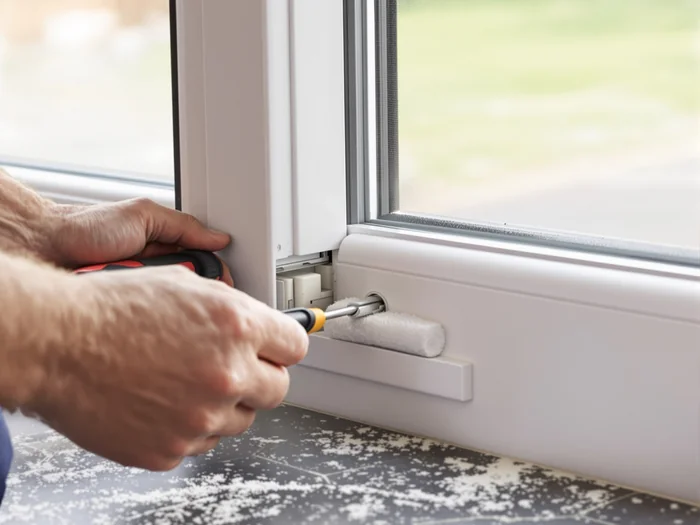
Measuring up a sliding patio door for an accurate repair quotation
How Much Does Sliding Door Repair Cost in the UK? (2026 Guide)
If your sliding or patio door is dragging, stuck, letting in draughts, or covered in condensation between the panes, the first question most homeowners ask is "what is this going to cost?" The honest answer: it depends — on the fault, the door type, the parts needed, and where you are in the UK. This guide gives you indicative 2026 ranges for every common repair, explains what drives the price up or down, and helps you decide whether to repair or replace.
Quick Cost Overview
These are indicative UK price ranges for 2026, based on what our network's specialists typically charge for parts and labour combined. Actual quotes vary by door type, part quality, access difficulty, and your region. All figures include VAT and fitting unless stated otherwise. These are not guaranteed prices — they are editorial guidance to help you budget.
| Repair Type | Indicative UK Range (2026) | Typical Duration |
|---|---|---|
| Roller replacement (per door) | £80 – £160 | 1-1.5 hours |
| Lock / gearbox replacement | £90 – £190 | 1-2 hours |
| Handle replacement | £60 – £130 | 30-60 minutes |
| Seal replacement (all sides) | £70 – £150 | 1-1.5 hours |
| Misted glass unit replacement (per unit) | £150 – £380 | 1-2 hours (may need 2 visits for ordering) |
| Track repair / replacement | £100 – £250 | 1.5-3 hours |
| Bifold door adjustment (per door set) | £80 – £170 | 1-2 hours |
| Full patio door supply & fit | £1,200 – £3,200 | Half-day (after manufacturing lead time) |
| Full bifold supply & fit | £3,000 – £7,000+ | 1-2 days (after manufacturing lead time) |
What Drives Each Cost
Roller Replacement
Roller replacement is the single most transformative sliding door repair. A door that has been dragging and grinding for months — sometimes requiring two hands and a shoulder to move — glides again with a fresh set of rollers. The cost depends on the roller type (single vs tandem wheels, steel vs nylon bearing), the door's weight (heavier aluminium doors need sturdier rollers), and whether the specialist needs to remove the door from its frame to access the bottom rollers. Most uPVC patio doors of standard width fall toward the lower end of the range. Heavy aluminium sliders and bifold door roller carriers tend toward the upper end. If you hear grinding or the door jumps off its track, see our roller replacement service for more detail.
Lock & Gearbox Replacement
A failed patio door lock or gearbox is both a security risk and a daily frustration. Lock replacement costs vary by lock type — a basic hook lock on a uPVC patio door is at the lower end; a multipoint mechanism with multiple hook points and a Euro-cylinder is at the higher end. Importantly, many lock problems are actually gearbox problems: the key turns but nothing engages. In those cases, replacing just the gearbox (rather than the entire lock strip) is often possible and reduces the cost significantly. Your specialist should inspect and advise whether a gearbox-only swap is viable. Read more about the options on our lock replacement page.
Handle Replacement
A loose, snapped, or stiff patio door handle may seem like a minor issue, but if the handle connects to a locking mechanism, ignoring it can leave you unable to secure the door. Replacement handles cost from £60 to £130 fitted. The largest variable is whether the handle is a current, off-the-shelf model (lower end) or a discontinued design that requires sourcing a matching or compatible replacement (upper end). Older uPVC patio doors — especially those fitted in the 1990s and early 2000s — often use handle designs that are no longer manufactured, so the specialist may need time to locate a suitable match. See our handle replacement service for details.
Misted Glass Unit Replacement
Condensation trapped between the panes of a double-glazed patio door means the sealed unit has failed. The fix is to replace the entire sealed glass unit — not just one pane, because double-glazed units are manufactured as a single sealed assembly. Indicative cost: £150 to £380 per unit. The spread is wide because it depends on unit size (a narrow sidelight panel costs less than the main sliding panel), glass specification (standard double glazed, toughened safety glass, low-E energy efficient, or acoustic), and access difficulty. Walk-on-access doors cost less to replace than upper-floor units requiring specialist handling. Since the glass unit usually needs to be ordered to size, expect two visits: one to measure and one to fit. Our glass replacement page has a deeper explanation of glass types and the replacement process.
Seal Replacement
Worn door seals let in draughts, road noise, and in exposed locations, driving rain. Replacing all the seals on a sliding or patio door — the brush pile strip, the rubber gasket, and any compression seals — typically costs between £70 and £150. It is one of the cheapest repairs with one of the biggest comfort payoffs. The main cost variable is the seal profile: some uPVC doors use proprietary gasket shapes that need to be ordered from a specific supplier, while standard brush pile and E-strip seals are widely available and inexpensive. More detail on seal types and the replacement process on our seal replacement page.
Full Door Supply & Fit
When a door's frame is rotten, blown, or so obsolete that parts are no longer available, replacement becomes the sensible option. A full supply-and-fit patio door — including removal and disposal of the old door, the new door unit, and installation — typically runs from £1,200 for a basic uPVC model to £3,200 for a large aluminium slider with high-spec glazing. Bifold door supply and fit starts around £3,000 for a three-panel uPVC system and can exceed £7,000 for a large, high-spec aluminium bifold with multiple panels. uPVC doors are more affordable at the point of purchase; aluminium doors typically cost more but offer slimmer sightlines, greater structural rigidity, and potentially longer service life. For a balanced comparison, see our bifold vs sliding comparison and our installation service page.
Regional Price Variation Across the UK
The indicative ranges on this page are UK-wide, but the quote you receive will reflect your local market. Labour rates vary across the country — a specialist working in a major city centre typically charges more per hour than one covering a smaller town, simply because their own overheads (fuel, parking, insurance, workshop space) are higher. This does not mean city-centre work is overpriced — it means the cost of doing business in that location is higher, and the quote reflects that honestly.
Parts availability also varies regionally. A specialist in Manchester or Birmingham who works on uPVC patio doors daily will carry the most common roller sizes and lock mechanisms on the van — the part is available immediately, and the repair is faster. A specialist covering a more rural area may need to order a specific part, which adds time but not necessarily cost. The key variable is the specialist's familiarity with the door systems in your area: a local specialist who knows your housing stock is more likely to have the right parts on hand than a generalist travelling from further afield.
Access difficulty affects labour time, and labour time drives cost. A ground-floor patio door with clear, level access is the quickest job. An upper-floor apartment slider — especially in a building with a small lift or narrow stairway — takes longer to access, may require two people to handle large glass panels safely, and involves more time spent navigating the building than actually working on the door. Similarly, a rear door accessed through a narrow terraced passageway takes longer to reach than one with direct street access. These are practical realities that any honest quote will account for.
Urgency is the final variable. Standard repairs booked during normal working hours are the most cost-effective. Emergency callouts — out of hours, weekends, or same-day response where the door cannot be secured — attract a premium because the specialist is prioritising your job over scheduled work. If your repair is not urgent, booking during the working week keeps the cost at the lower end of the indicative ranges. If the door is a security risk — it will not lock, or it has come off its track leaving the property open — the premium for an urgent response is worth paying.
For the full indicative price ranges across all repair types, see our pricing page. For an example of how local housing stock affects repair patterns, our Manchester and Glasgow city pages show how the same repair can look different depending on where you live.
Repair vs Replace: The Economics
A repair quotation with door hardware samples — repair is often far cheaper than replacement
One of the most common dilemmas our network's specialists encounter is the homeowner weighing a repair quote against the cost of a brand-new door. The decision is rarely black and white — it depends on the door's age, overall condition, and how many different faults it has accumulated.
A useful rule of thumb: if the total cost of all needed repairs exceeds roughly half the cost of a comparable new door, it is worth seriously considering replacement. For example, if your patio door needs new rollers, new seals, and a new lock — cumulatively perhaps £300–£450 — and a comparable new door would cost £1,600 supplied and fitted, repair is almost certainly the better financial decision. But if the frame itself is warped, the glass units are blown in multiple panels, and the hardware is all at end of life, the repair costs climb toward replacement territory.
Other factors to weigh: a new door comes with a fresh warranty and the latest glazing standards, which may improve thermal performance and reduce heating bills. An older door that is otherwise structurally sound, on the other hand, can often be kept in service for many more years with relatively modest repairs — which is both cheaper and more environmentally sustainable than manufacturing and transporting a whole new door. This is the "repair-first" philosophy at the core of our platform: if it can be fixed properly, fix it. If replacement genuinely makes more sense, an honest specialist will tell you so.
What's Included in a Quote
When you get a quote through our platform, the specialist's price should be an all-in figure covering parts, labour, and VAT. Before agreeing to any work, confirm with the specialist exactly what the quote includes. A properly itemised quote lets you see:
- The specific repair or replacement being quoted for
- The parts being used (brand and specification, where relevant)
- Whether labour is charged at a fixed job rate or an hourly rate
- Whether there are any additional costs for access equipment, parking, or waste disposal
- Whether VAT is included
- Whether there is any callout or diagnostic charge if you decide not to proceed
Our network's specialists operate on a transparent, no-hidden-cost basis. If something is unclear in the quote, ask — a good specialist will happily explain every line.
How to Keep Repair Costs Down
Describe the problem accurately
When you submit a quote request, describe what the door is doing — dragging, grinding, not locking, letting in draughts — in as much detail as you can. If you can identify the door brand or system type, even better. This helps the specialist arrive with the right parts and tools on the first visit, saving time and avoiding a second callout.
Send photos
A few clear photos of the door, the track, the lock faceplate, and any visible damage are worth a thousand words. They let the specialist pre-assess the fault and confirm they carry the relevant parts before they travel to you.
Combine repairs where possible
If your door has multiple issues — say, worn rollers and perished seals — having both addressed in a single visit is more cost-effective than two separate callouts. Mention everything that is bothering you about the door when you request a quote.
Get multiple quotes
Our platform connects you with a vetted local specialist, but you are always free to compare quotes. A fair quote should be clear, itemised, and come with no hard-sell pressure to upgrade to a full replacement if a repair will do the job.
Mid-article takeaway: Most door repairs fall in the £60–£250 range and are completed in a single visit. If you are unsure what your door needs, start with a free quote — a specialist can diagnose the fault on-site and give you a firm price before any work begins.
Get a Free QuoteFrequently Asked Cost Questions
How much does it cost to replace sliding door rollers in the UK?
Indicative UK prices for sliding door roller replacement typically fall between £80 and £160, including the cost of the rollers and the specialist's labour. The exact price depends on the door weight and size, whether it is a uPVC or aluminium system, and how easily accessible the rollers are. Heavier aluminium doors and tandem-wheel systems tend toward the upper end of the range. Your quote should always include both parts and fitting — ask the specialist to confirm this before work starts.
Is it cheaper to repair a sliding door or replace it?
In most cases, repairing a sliding door is significantly cheaper than replacing it. A full supply-and-fit replacement of a patio door typically runs from £1,200 to £3,200, whereas individual repairs such as roller replacement (£80–£160), lock replacement (£90–£190), or seal replacement (£70–£150) are a fraction of that cost. A useful rule of thumb is: if the total repair estimate exceeds roughly half the cost of a comparable new door, it is worth weighing replacement as an alternative. Your specialist should give you an honest assessment of which route makes more financial sense for your specific door.
What affects the cost of patio door glass replacement?
The main factors driving the cost of replacing a sealed glass unit in a patio door are the unit's size, the glass specification (standard double glazed, toughened safety glass, low-E energy efficient, acoustic, or obscure), and access difficulty. Indicative 2026 UK ranges for a misted-unit replacement are £150–£380 per unit. Toughened safety glass — required by UK Building Regulations for doors — is standard in most replacement units, but upgrading to low-E or acoustic glass adds cost. Larger units and those on upper floors where access equipment is required will be at the higher end.
Ready to get an accurate quote for your door?
Tell us what is wrong and where you are. We will connect you with a vetted local specialist who will give you a clear, itemised price — no obligation, no callout fee.