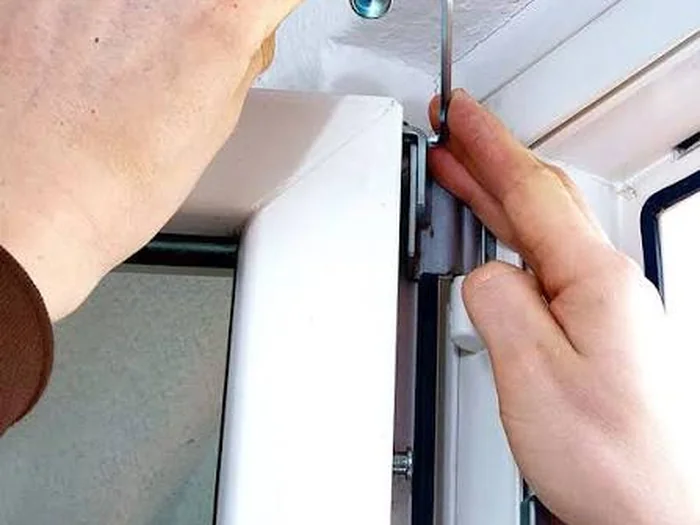
Adjusting the top pivot hinge of an aluminium bifold door
Blog · Adjustment Guide
How to Adjust Bifold Doors: The Complete UK Guide
Bifold doors transform a room when they are working properly — gliding open with fingertip pressure, folding neatly to one side, flooding the space with light. When they are not working properly — scraping the floor, jamming mid-fold, or refusing to close flush — they are a daily frustration. The most common cause is simply that the doors have drifted out of adjustment. This guide explains how to adjust them back, what tools you need, and — just as importantly — when adjustment alone is not enough and a specialist should take over.
Why Bifold Doors Drift Out of Alignment
Bifolds are mechanically complex. Each panel is connected to the next by hinges, suspended from a top track, and guided along a bottom track by roller carriers. This linkage system is precision-engineered to keep all the panels moving together in a smooth folding sequence — but it is also sensitive to small changes. The three most common reasons bifolds drift out of alignment are:
- Building movement. Every house settles slightly — new extensions especially. A tiny fraction of a millimetre of movement at the lintel translates into a door that scrapes the floor.
- Hinge wear. The hinges carry the weight of every panel. Over hundreds or thousands of open-close cycles, the hinge pivots can wear microscopically, and that wear accumulates across multiple panels into visible misalignment.
- Heavy use. A bifold that is opened and closed multiple times a day — common on kitchen extensions — will drift out of adjustment faster than one that is only opened on warm weekends.
The reassuring point: in the vast majority of cases, this is correctable with adjustment. You do not need new doors. A specialist with the right Allen keys and an understanding of the specific bifold system can realign a full door set in one to two hours. Our bifold door repair specialists do this routinely. If your problem turns out to be a sliding door rather than a bifold — the symptoms can be similar, particularly dragging and sticking — see our sliding door troubleshooting guide for the equivalent diagnosis steps. For the indicative costs of bifold adjustment and related repairs, our UK cost guide breaks down what to expect.
Understand Your Bifold's Adjustment Points
Before you turn any screws, it helps to know what each adjustment point does. Bifold systems vary by manufacturer, but the core adjustment points are consistent across most UK-market aluminium and uPVC systems.
Top Pivot (Height Adjustment)
The top pivot is the primary suspension point for each panel. On most aluminium bifolds, the top pivot has an adjustment screw that raises or lowers the panel. Turning it clockwise raises the panel; anticlockwise lowers it. This is the adjustment you use when the door is scraping the floor — you are lifting the panel so the rollers carry the weight rather than the bottom edge dragging along the track. On uPVC bifolds, the adjustment is often at the bottom roller carrier rather than the top pivot, so check which system you have.
Hinge Grub Screws (Lateral Adjustment)
The hinges connecting panels have small grub screws — usually on the side of the hinge body — that control the lateral gap between panels. Loosening these allows you to move a panel slightly closer to or further from its neighbour. This is the adjustment for uneven gaps between panels, or for a panel that is rubbing against the adjacent panel during folding.
Roller Carriers (Bottom Guidance)
The roller carriers at the bottom of each panel guide the door along the bottom track. On some systems, these have height adjustment (more common on uPVC bifolds) and on others they are fixed (more common on aluminium systems where height is controlled at the top pivot). The rollers themselves can wear flat over time — if the adjustment screws are at their limit and the door still drags, the rollers need replacing, not adjusting further.
Traffic Door Mechanism
If your bifold has a traffic door — a single panel that opens independently like a normal door — it will have its own lock mechanism and possibly additional hinges. A traffic door that has dropped is adjusted at its own hinges, independently of the rest of the bifold set.
Step-by-Step Bifold Adjustment
Tools you will need:
- A set of metric Allen keys (2.5mm, 3mm, 4mm, 5mm cover most UK bifold systems)
- One flathead and one Phillips screwdriver
- A spirit level (small torpedo level is ideal)
- A step ladder or sturdy stool so you can comfortably reach the top pivots
- A second person to help sight the door alignment from a distance while you adjust — not essential but very helpful
Identify which panel is the problem
Close the bifold fully and look along the top and bottom edges from the inside. Is there an uneven gap between panels? Is one panel visibly lower than the rest? Open and close the door slowly — where does it scrape or stick? Identify the specific panel or panels causing the problem before you touch anything. Adjusting the wrong panel is the most common DIY mistake.
Start with height at the top pivot
If the door is scraping the floor, you need to raise it. At the top pivot of the affected panel, insert the correct size Allen key into the adjustment screw. Turn clockwise to raise, anticlockwise to lower. Adjust in quarter-turn increments only — no more. After each quarter-turn, close the door and check the clearance at the bottom. You want a consistent 3mm to 5mm gap along the full length of the panel.
Adjust lateral position at the hinges
If the gap between two panels is uneven — wider at the top than the bottom, or one panel rubs against the next — adjust the hinge grub screws. Loosen the grub screw slightly, reposition the panel to even out the gap, and retighten. You may need to go back and forth between height and lateral adjustments, because changing one affects the other.
Check the lock alignment
After adjusting height and lateral position, close the door fully and try the lock. If the lock hooks no longer engage cleanly with the keeps, you have raised the door too high or shifted it too far laterally. Back off your last adjustment slightly and test again. A door that slides beautifully but will not lock is not a successful adjustment.
Test the full fold and close cycle
Open the door fully — fold all panels back — and then close it again. Does the folding sequence feel smooth? Do the panels stack neatly? Is the traffic door latching properly? Work the door through its full range of motion three or four times to confirm the adjustment has held and the door behaves consistently.
Aluminium Bifold Hinge Adjustment — Dedicated Section
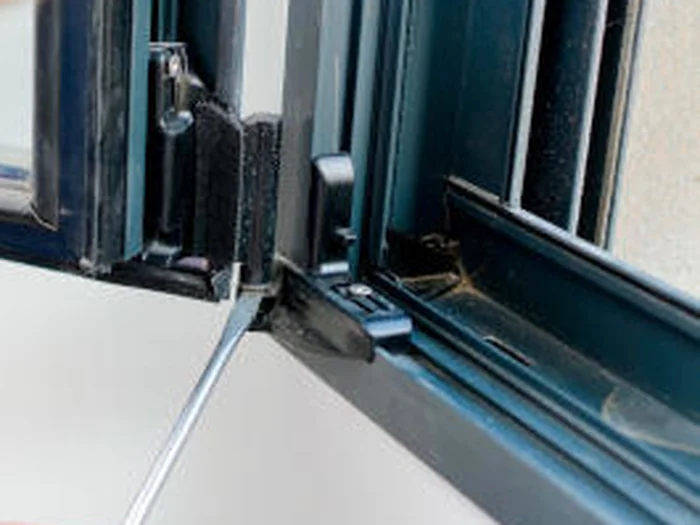
Top guide and carrier mechanism inside the head track of a bifold door
Aluminium bifolds — from systems like Origin, Smart Systems, Reynaers, and Schüco — are the premium end of the UK bifold market. Their adjustment mechanisms are generally well-designed and accessible, but each system has its quirks. Here is what you need to know specifically about aluminium bifold hinge adjustment:
- Most aluminium bifolds adjust at the top pivot, not the bottom roller. The top pivot carries the panel's weight; the bottom roller is primarily a guide.
- The adjustment screw at the top pivot typically takes a 4mm or 5mm Allen key. It is usually recessed into the top track — you may need to open the door slightly to access it.
- Some aluminium systems have a locking grub screw that secures the height adjustment. You must loosen this locking screw before adjusting height, and retighten it afterwards. If you turn the adjustment screw and nothing happens, check for a locking grub screw.
- Lateral adjustment on aluminium bifolds is usually via grub screws on the hinge body. These are small — typically 2.5mm or 3mm Allen heads — and easy to strip if you use an undersized key. Make sure the key fits snugly before applying torque.
If your aluminium bifold uses a proprietary adjustment mechanism that is not responding to the steps above, or if the adjustment points appear to be at their limit, stop. Forcing adjustment screws on a premium aluminium system can damage the hinge and turn a simple realignment into a hinge replacement. A specialist familiar with your specific system can make the adjustment quickly and safely.
Common Mistakes When Adjusting Bifolds
Over-tightening everything
The grub screws and adjustment screws on bifold hinges are not structural bolts — they are fine adjustment mechanisms. Cranking them tight can strip the threads, snap the screw, or bind the hinge. Snug is enough. If the screw stops turning easily, it is tight. Do not give it "one more turn for good measure."
Adjusting the wrong end first
If the door is scraping the floor, the problem is at the top pivot — raise the door from the top, do not try to force the bottom rollers to lift it. Conversely, if the panels are not folding neatly, the problem is likely lateral alignment at the hinges, not height.
Adjusting without cleaning first
A surprising number of "misaligned" bifolds are simply riding on dirty tracks. Vacuum the tracks, wipe them clean, and check the roller carriers for debris before you reach for the Allen keys. Dirty tracks cause dragging that mimics misalignment.
Ignoring the traffic door
The traffic door — the single panel you use as a normal door — is often the most-used panel and therefore the first to drift. It adjusts independently. Do not adjust the entire bifold set if only the traffic door is scraping.
When Adjustment Isn't Enough
Adjustment solves the majority of bifold problems, but it has limits. Here are the signs that you have moved beyond adjustment territory:
- Rollers have worn flat. If the roller wheels have visible flat spots — they should be perfectly round — adjusting height will not stop the door dragging. The rollers need replacing. See roller replacement.
- A hinge has physically failed. If a hinge body is cracked, seized solid, or the pivot pin is visibly worn, no amount of adjustment will fix it. The hinge needs replacement.
- The frame has distorted. If the top track or the bottom track is visibly bent or bowed, the frame itself needs attention. This can happen if the lintel above the opening has settled unevenly — a structural, not a door, problem.
- The traffic door gearbox has failed. If the traffic door handle spins without resistance, the internal gearbox has failed. This is a lock replacement job, not an adjustment.
Mid-article takeaway: A specialist bifold adjustment — where an experienced technician works through every panel, realigning height and lateral position, lubricating the moving parts, and checking lock engagement — typically takes one to two hours and costs £80 to £170. It is one of the most cost-effective door services: for less than the price of a new panel, your bifold glides like it did on day one. If your DIY adjustments have not solved the problem, this is the logical next step — not a full replacement.
Get a Free QuoteFrequently Asked Bifold Adjustment Questions
Why has my bifold door dropped and started catching on the floor?
Bifold doors drop for a handful of common reasons: the top pivot hinge has worn or shifted, the building has settled slightly (common in new extensions), the roller carriers at the bottom have worn, or the hinges have loosened over time from regular use. The good news is that almost all dropped bifolds can be corrected with adjustment — usually at the top pivot and the hinge grub screws. It is rare for a dropped bifold to need full replacement. A specialist can typically adjust and realign a bifold door set in one to two hours, restoring smooth operation without replacing any parts.
How do I adjust aluminium bifold door hinges?
Aluminium bifold door hinges typically have grub screws on the hinge body that allow for lateral adjustment — moving the panel closer to or further from the frame — and a pivot screw at the top of each panel that controls the door's height. To adjust height: use an Allen key on the top pivot screw, turning clockwise to raise the panel or anticlockwise to lower it. To adjust lateral position: loosen the hinge grub screws, reposition the panel so the gap between panels is even, and retighten. Always work in small increments and test the door's movement after each change. Different bifold systems (Origin, Smart Systems, Reynaers, etc.) have slightly different adjustment mechanisms, so if you are unsure, take a clear photo of the hinge and consult the system's documentation or a specialist.
When is bifold door adjustment not enough and repairs are needed?
Adjustment alone will not fix a bifold door if the rollers have worn flat (causing the door to scrape regardless of height adjustment), if a hinge has physically broken or seized, if the gearbox in the traffic door has failed, or if the frame itself has distorted. Signs that you have moved beyond adjustment territory include: the door scrapes even at maximum height adjustment, there is visible metal wear or flat spots on the rollers, the hinge body has cracked, or the door closes but leaves a visible gap at the top or bottom. In these cases, the worn component — rollers, hinges, or gearbox — needs replacement, which a bifold specialist can do without replacing the entire door system.
Need a bifold specialist to sort your doors?
If adjustment has not solved the problem — or if you would rather a professional handle it from the start — get a free quote from a vetted local bifold specialist.
Get a Free Quote